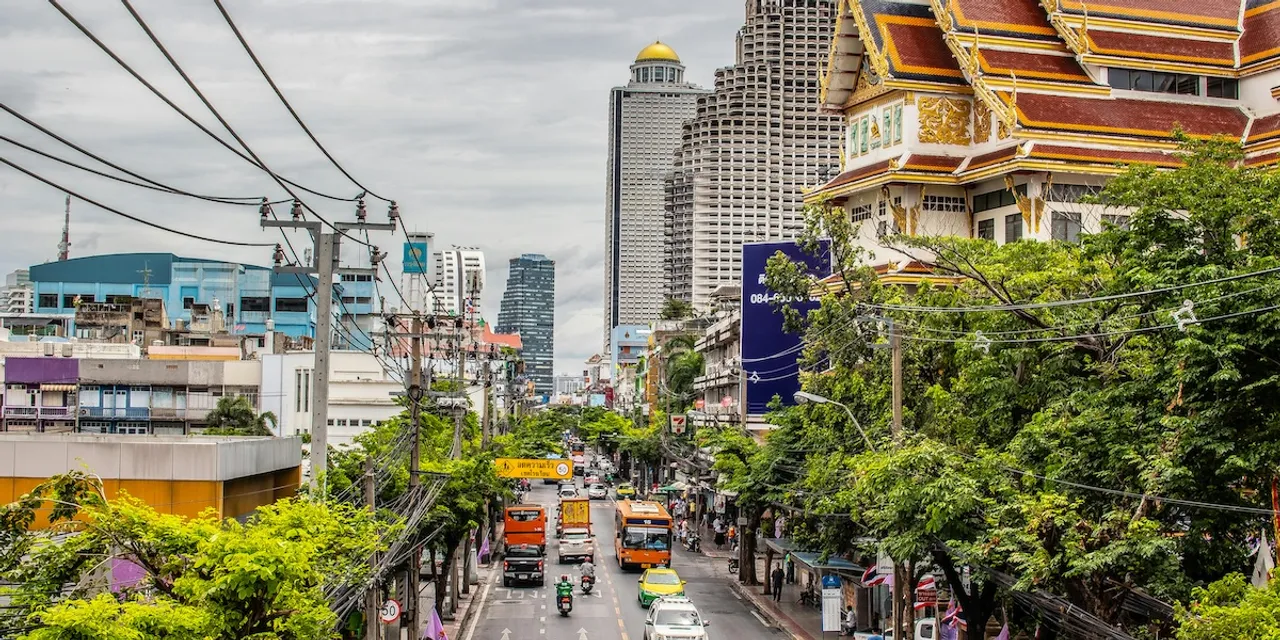
Diabetes in Thailand: Insulin Storage, Import Rules and Heat Management
Thailand's heat, high humidity, and 30-day import limit create specific challenges for diabetes travellers. Here's what to prepare before you fly.
What changes when you travel to Thailand with diabetes
Bangkok's year-round average temperature of 28°C, combined with humidity peaking at 79% during the wet season, puts insulin at genuine risk of degradation if left unrefrigerated. Thailand's Food and Drug Administration (Thai FDA) limits personal medication imports to a 30-day supply, which requires planning if your trip is longer.
This guide covers Thai FDA import rules, local brand names for common diabetes medications, how to find an endocrinologist (แพทย์ต่อมไร้ท่อ) in Bangkok and Phuket, cold-chain management in tropical conditions, and emergency communication in Thai. Store your International Patient Summary on Nomedic so any clinician can access your full medication list without a language barrier.
Medical disclaimer: This guide is for informational purposes only and does not constitute medical advice. Always consult your specialist before travelling, particularly regarding changes to your treatment schedule, vaccination requirements, and travel insurance.
Key risks for diabetes travellers in Thailand
Insulin degradation in tropical heat
Insulin loses biological activity when exposed to temperatures above 32°C; Thailand's mean temperature is 28°C and spikes can reach 43.5°C. Always carry insulin in a FRIO cooling wallet or equivalent insulated case, and never leave it in a parked vehicle or checked luggage.
30-day import limit
The Thai FDA permits a personal supply of up to 30 days for non-controlled medications, with no prior permit required for standard diabetes drugs such as insulin, metformin, and sitagliptin[1]. If your stay exceeds 30 days, consult an endocrinologist in Thailand to obtain a local prescription for continuation.
Hypoglycaemia risk from heat and altered activity
Heat compounds insulin absorption rates and increased activity in holiday settings can lower blood glucose faster than expected. Carry fast-acting glucose (glucose tablets or sugary drinks) at all times; convenience stores (7-Eleven, Family Mart) are ubiquitous across Thailand and stock suitable options.
High-carbohydrate local cuisine and variable meal timing
Thai food is rice-heavy, and street-food mealtimes are irregular compared to a structured home routine. Plan glucose monitoring adjustments with your specialist before departure if your regimen is tightly meal-timed.
Foot injury risk from warm, wet conditions and open footwear
Open sandals, temple cobblestones, beach sand, and wet surfaces raise the risk of foot injuries that heal slowly. Wear closed protective footwear for sightseeing and inspect feet daily.
Preparation checklist
- Book an endocrinology review 4-6 weeks before departure — confirm your regimen is stable and get written documentation of all medications and diagnoses.
- Obtain a doctor's letter on official letterhead — include your name, diagnosis, all medication names (INN and brand), dosages, and prescribing physician's licence number, as required by Thai FDA.
- Pack a 30-day medication supply maximum in original, labelled containers — Thailand's import limit is 30 days for non-controlled medications; bring documentation for any quantity over this.
- Carry all insulin and glucose-lowering injectables in hand luggage only — cargo holds expose medication to uncontrolled temperatures; IATA permits medical liquids with supporting documentation.
- Bring a FRIO cooling wallet or insulated case for insulin storage — Bangkok's ambient temperature regularly exceeds the 25-30°C safe storage threshold for in-use insulin.
- Create your International Patient Summary on Nomedic — your IPS stores your diagnosis, medications, allergies, and emergency contacts in a format readable by Thai clinicians offline.
- Save Thailand's emergency numbers offline: ambulance 1669, police 191 — store these in Nomedic alongside your IPS before you travel.
- Pack double your usual supply of glucose test strips and lancets — these can be harder to source in rural areas and exact brands may not be available.
- Research the nearest endocrinology centre to your accommodation — Bumrungrad International, Vejthani, and Bangkok Hospital all have dedicated diabetes centres; identify the closest before you arrive.
- Confirm your travel insurance policy explicitly covers diabetes-related emergencies and medication replacement — Thailand has no reciprocal healthcare agreement with any country.
Documents to carry when travelling to Thailand with diabetes
Keep these documents accessible on your phone and in physical copy; the Nomedic app consolidates items 1 and 6 automatically and makes them shareable offline.
Your International Patient Summary (IPS)
Your Nomedic IPS contains your diabetes diagnosis, current medications with INN and brand names, allergies, blood type, and emergency contacts — all in a format any clinician worldwide can read.
In Thailand, where most emergency clinicians will not have access to your home health records, the IPS removes the need for verbal explanation at triage. A shared QR code lets hospital staff load your full record in seconds, even without mobile data.
Full document checklist
Keep the following accessible on your phone and ready to share. Your Nomedic IPS covers items 1 and 6 automatically.
- ·Your Nomedic IPS Covers your diabetes diagnosis, medications, allergies, and functional status. Offline and QR-shareable.
- ·Specialist letter (endocrinologist) Must state your diagnosis, all medications with INN names and doses, and your physician's name, address, and licence number.
- ·Prescriptions with INN names Carry the original prescription in English, or a certified translation, for each medication in your supply.
- ·Travel insurance schedule Policy number and insurer's 24-hour emergency line saved in your Nomedic profile.
- ·Medical device documentation If you use a continuous glucose monitor (CGM) or insulin pump, carry the manufacturer letter confirming it is a medical device for airport security.
- ·Thailand emergency numbers Ambulance: 1669. Police: 191. Fire: 199. Saved offline in Nomedic.
Bringing your diabetes medications to Thailand
Standard diabetes medications including insulin, metformin, sitagliptin, empagliflozin, semaglutide, and gliclazide are non-controlled under Thai law and may be imported without a prior permit for up to a 30-day personal supply[1]. Each medication must remain in its original labelled container, accompanied by a valid prescription or doctor's letter from your prescribing physician. Trips longer than 30 days require either a local Thai prescription or a Thai FDA permit (Form IC-2) obtained at least 15 days before arrival via permitfortraveler.fda.moph.go.th.
Do not post your medication to Thailand.
Mailing prescription medication into Thailand is prohibited under the Drug Act (B.E. 2510) and may result in confiscation and legal proceedings. Always carry your medication in person in hand luggage.
Diabetes medications: brand names, INNs, and Thailand availability
Most first- and second-line diabetes medications are available at major private hospital pharmacies in Bangkok, Chiang Mai, and Phuket; availability is more limited at rural pharmacies.
Requires refrigeration (2-8°C) for unopened stock; in-use pens tolerate up to 25-30°C for a limited period per product SmPC.
Requires refrigeration (2-8°C) for unopened stock; once opened, store below 30°C away from direct sunlight.
Ozempic requires refrigeration (2-8°C) until first use; once in use, store below 30°C for up to 56 days.
Metformin and iodinated contrast agents
If you require an imaging procedure in Thailand that uses an iodinated contrast dye (such as a CT scan with contrast), Thai clinicians will typically pause metformin for 48 hours before and after the procedure due to the risk of lactic acidosis. Inform any radiologist or emergency clinician that you take metformin before any contrast-enhanced investigation.
Travelling with injectable therapies
If your regimen includes insulin, semaglutide, or any other injectable, these steps apply regardless of your entry point into Thailand.
Your medication list, ready to share.
Nomedic stores your medication name, INN, dosage, and frequency — readable by any clinician worldwide.
Healthcare and prescriptions in Thailand
Thailand operates a Universal Coverage Scheme for its citizens, but international travellers have no reciprocal access and must use private facilities or pay out-of-pocket at public hospitals. Private specialist (endocrinologist) consultations in Bangkok cost ฿1,500-3,000 (~$47-$93 / ~€43-€79) at private hospitals; public hospital specialists charge ฿200-500 (~$6-$16 / ~€6-€13) but may involve longer waits. Foreign prescriptions are not directly transferable to Thai pharmacies; a Thai clinician must issue a local prescription for any ongoing supply.
Common oral diabetes medications such as metformin (Glucophage), gliclazide (Diamicron), sitagliptin (Januvia), and empagliflozin (Jardiance) are available at private hospital pharmacies and larger chain pharmacies (Boots, Watsons) with a local prescription. Insulin brands including Humalog, Lantus, Ozempic, and Toujeo are stocked at major hospital pharmacies in Bangkok, Chiang Mai, and Phuket; availability is more limited outside urban centres.
Insulin is dispensed through hospital pharmacies
For an emergency supply of insulin in Thailand, go directly to the pharmacy of a private hospital such as Bumrungrad International, Vejthani, or Bangkok Hospital with your Nomedic IPS and specialist letter. Retail pharmacies outside hospital networks may not stock all insulin formulations or may require a local prescription issued the same day.
Finding a diabetes specialist
Endocrinologists (แพทย์ต่อมไร้ท่อ — phaet tom rai tha) work within the Endocrinology and Metabolism departments of major private hospitals. Bumrungrad International Hospital (Bangkok), Vejthani Hospital (Bangkok), MedPark Hospital (Bangkok), and Bangkok Hospital Phuket all have dedicated diabetes or endocrine centres with English-speaking staff. Appointments are available and walk-ins are accepted at most private facilities, but booking ahead reduces wait times. Identify the nearest centre to your accommodation before travel and save the address offline. Use Nomedic's provider search to locate diabetes specialists near your destination.
Search for providers near your destination
Use Nomedic's provider search to find diabetes specialists in Thailand. Save the address and phone number offline before you travel.
If your cold chain breaks in Thailand
Whether a pen or vial is still safe to use depends on the specific product and how long it was exposed to heat; check your product's summary of product characteristics (SmPC) for the in-use tolerance window, which varies from 10 days to 8 weeks depending on the formulation. Insulin exposed to temperatures above 32°C for an extended period should be replaced rather than used.
Managing heat and blood glucose day to day in Thailand
Bangkok's average daytime temperature ranges from 31.7°C to 35.4°C year-round, with relative humidity between 66% and 79%; during the hot season (March to mid-May), the heat index can exceed 50°C. Thailand's Department of Health has classified heat indices above 52°C as 'extremely dangerous', a level recorded in Bangkok during March 2026[7].
Plan outdoor activity for before 10 am or after 5 pm, when temperatures are lower. Thailand's network of air-conditioned shopping centres (Central, MBK, Terminal 21 in Bangkok) provide reliable cool rest stops throughout the day. Increase blood glucose monitoring frequency during active or hot days, as heat accelerates insulin absorption and physical activity in unfamiliar terrain raises hypoglycaemia risk. Carry oral rehydration salts alongside fast-acting glucose, as dehydration from sweating can mask or compound hypoglycaemia symptoms. If you use a CGM sensor, note that extreme heat may affect adhesive; carry extra adhesive wipes and backup testing strips.
Hypoglycaemia symptoms overlap with heat exhaustion
Sweating, dizziness, and rapid heartbeat are shared symptoms of hypoglycaemia and heat exhaustion. If you experience these in hot conditions, test your blood glucose first before attributing symptoms to heat alone. If glucose is normal and symptoms persist beyond 20 minutes after moving to a cool environment, follow the guidance in the Emergency tab.
Thai phrases for clinicians
Show your Nomedic IPS first — it removes the need to explain your diagnosis verbally. If verbal communication is needed:
“ฉันเป็นโรคเบาหวาน”
I have diabetes
“น้ำตาลในเลือดของฉันต่ำ ฉันต้องการน้ำตาลตอนนี้”
My blood sugar is low. I need sugar now.
“ฉันต้องการพบแพทย์ต่อมไร้ท่อ”
I need to see an endocrinologist
“ฉันฉีดอินซูลินและรับประทานเมทฟอร์มิน”
I take insulin and metformin
“โรงพยาบาลที่ใกล้ที่สุดอยู่ที่ไหน”
Where is the nearest hospital?
“ฉันต้องการอินซูลินฉุกเฉิน”
I need an emergency supply of insulin
Insurance considerations
What to know about travel insurance
Many travel insurance policies treat diabetes as a pre-existing condition and exclude costs arising from it unless explicitly declared and covered. Emergency hospitalisation at a private Bangkok hospital for a diabetes complication can exceed ฿150,000 (~$4,650 / ~€4,300), making adequate cover essential before departure.
What to look for in a policy
Not just 'pre-existing conditions covered'. Your condition should be named on the schedule.
Covers medical repatriation if local care is insufficient for your needs.
Covers emergency replacement if your insulin or other medication is lost, damaged, or delayed.
So someone can communicate with Thai clinicians on your behalf in an emergency.
What to declare at application
Declare thoroughly. Incomplete disclosure can invalidate your entire policy, not just the diabetes-related claim.
Type 1, Type 2, LADA, or gestational history — classifiers affect underwriting.
Use the INN alongside the brand name for clarity.
Insurers use recent control metrics to assess risk level.
Hypertension, neuropathy, nephropathy, retinopathy, and cardiovascular disease are common comorbidities that must be declared.
Your policy number and emergency assistance line, saved alongside your IPS and accessible offline.
Thailand has no reciprocal healthcare agreement with EU/EEA countries or with the United Kingdom. An EHIC or GHIC card provides no entitlements in Thailand. All travellers, regardless of nationality, should hold comprehensive private travel insurance with explicit diabetes cover before arriving.
Emergency protocol
Reaching a Thai emergency department
Severe hypoglycaemia (loss of consciousness, seizure, inability to swallow) and diabetic ketoacidosis (DKA) are medical emergencies requiring immediate hospital attendance. Contact your travel insurer's 24-hour assistance line before or alongside calling an ambulance — they can coordinate direct billing and a Thai-speaking liaison.
When you arrive — follow in order
Full clinical picture in seconds, no verbal explanation needed.
Hand your phone to the triage nurse:
ฉันเป็นโรคเบาหวาน น้ำตาลในเลือดของฉันอยู่ในระดับวิกฤต ฉันต้องการความช่วยเหลือทันที
I have diabetes. My blood glucose is at a critical level. I need help immediately.
Your Nomedic IPS lists every medication with INN, dose, and frequency — hand the QR code to the attending clinician.
If emergency investigations include a contrast CT scan, inform the clinician you take metformin to prevent lactic acidosis risk.
Calls and location
Ambulance: 1669. Police: 191. Tell the operator your GPS location or the nearest landmark. In Bangkok, major private hospitals including Bumrungrad International (+66 2 667 1000) and Vejthani Hospital (+66 2 734 0000) have 24-hour emergency departments with English-speaking staff.
In hospital
Inform the treating clinician you have diabetes before any wound is dressed. Impaired healing and infection risk mean that even minor lacerations from temple cobblestones or beach glass require thorough cleaning, appropriate dressing, and a wound review within 24-48 hours.
After any emergency
Before you leave the hospital if possible.
Required for insurer reimbursement and continuity of care with your home endocrinologist.
Open Nomedic and tap Share to generate a QR code any clinician can scan.
Frequently asked questions
Is diabetes medication legal in Thailand?
Yes, standard diabetes medications including insulin, metformin, sitagliptin, empagliflozin, semaglutide, and gliclazide are legal to bring into Thailand, provided each medication is carried in its original labelled container with a valid prescription or doctor's letter and the supply does not exceed 30 days. Travellers staying longer than 30 days must obtain either a local Thai prescription or a Thai FDA permit (Form IC-2) at least 15 days before arrival.
Can I bring my diabetes medication into Thailand?
Standard diabetes medications including insulin, metformin, sitagliptin, empagliflozin, gliclazide, and semaglutide are non-controlled under Thai law and may be imported without a prior permit for up to a 30-day personal supply[1]; keep each medication in its original labelled container with a valid prescription or doctor's letter.
Do not post medication to Thailand
Mailing prescription medication into Thailand is prohibited and may result in confiscation. Always carry in person in hand luggage.
Are diabetes medications available in Thailand pharmacies?
Metformin (Glucophage), gliclazide (Diamicron), sitagliptin (Januvia), and most insulin brands (Humalog, Lantus, Ozempic) are available at private hospital pharmacies in Bangkok, Chiang Mai, and Phuket; a local Thai prescription is required to dispense them. Retail chain pharmacies (Boots, Watsons) stock common oral agents but may have limited insulin ranges — for an emergency supply, go directly to a private hospital pharmacy with your Nomedic IPS and specialist letter.
What are the emergency numbers in Thailand?
Ambulance
1669
Police
191
Fire
199
How can I communicate my diabetes diagnosis in an emergency in Thailand?
Show your Nomedic IPS first. If verbal communication is needed:
“ฉันเป็นโรคเบาหวาน”
I have diabetes
“ฉันฉีดอินซูลินและรับประทานเมทฟอร์มิน”
I take insulin and metformin
How does Thailand's heat affect insulin and blood glucose control?
Thailand's heat index can exceed 50°C during the hot season (March to mid-May), which accelerates insulin absorption and raises hypoglycaemia risk during outdoor activity. Heat above 32°C degrades insulin potency if the medication is left unrefrigerated beyond product-specific tolerance windows.
Cold chain in practice
Carry a FRIO cooling wallet for in-use insulin pens. Store unopened stock in your hotel mini-bar refrigerator (2-8°C). Never leave insulin in a parked vehicle or direct sunlight — temperatures inside a parked car in Thailand can exceed 60°C.
Do I need special travel insurance to visit Thailand with diabetes?
Thailand has no reciprocal healthcare agreement with any country, so all treatment costs fall to the individual. Emergency hospitalisation for a diabetes complication at a private Bangkok hospital can exceed ฿150,000 (~$4,650 / ~€4,300); a policy with explicit diabetes cover and medical evacuation is essential.
Declare thoroughly
Declare your diabetes type, current medications, last HbA1c, and all associated conditions. Incomplete disclosure invalidates the entire policy, not just any diabetes-related claim.
Sources
- [1] Thai FDA — Guideline of importation for personal use: bringing health products
- [2] Thai FDA — Permit for Travellers Carrying Narcotic or Psychotropic Medicines
- [3] INCB — Travellers' Guide: Thailand (2024)
- [4] Bumrungrad International Hospital — Endocrinology, Diabetes & Clinical Nutrition Center
- [6] HealthDeliver Bangkok — Cost of GP and Specialist Consultations in Bangkok
- [7] Department of Health, Ministry of Public Health Thailand (Anamai) — heat index guidance
- [8] WellMed Bangkok — Cost of Care for Type 2 Diabetes in Thailand
- [9] The Nation Thailand — Thailand's 52°C Heat Index Warning (2026)
- [11] Vejthani Hospital — Diabetes Center Bangkok Thailand
- [12] Diabetes Association of Thailand
More guides in Thailand
- CityChiang Mai Health Guide
- CityBangkok Health Guide
- CityPhuket Health Guide
- ConditionTransgender in Thailand: HRT Import Rules, Clinics and Hormone Access
- ConditionTravelling to Thailand with ADHD: Medications, Customs Rules and Healthcare
- ConditionTravelling to Thailand with Anxiety Disorder: Medications, Healthcare and Emergency Protocols
- ConditionPregnancy in Thailand: Hospitals, Costs & Mosquito Risk
- MedicationAtomoxetine in Thailand: Strattera, Import Rules, and Pharmacy Access
- MedicationBenzodiazepines in Thailand: Controls, Brands and Pharmacy Access
- MedicationAdderall in Thailand: Category 1 Narcotic Ban, ADHD Plan
- MedicationAmphetamine / Dextroamphetamine in Thailand: Category 1 Ban and Legal Risk
- MedicationBuspirone in Thailand: Import Rules, Brands and Pharmacy Access
- MedicationConcerta in Thailand: Category 2 Status, Supply and Prescribers
- MedicationDexamfetamine in Thailand: Controls and Import Rules
- MedicationDiazepam in Thailand: Controls, Import Rules and Brands
- MedicationGuanfacine in Thailand: Import Rules, Brands and Prescribing
- MedicationInsulin in Thailand: Import Rules, Brands and Cold Chain
- MedicationLorazepam in Thailand: Controls, Import Rules and Pharmacy Access
- MedicationMedikinet in Thailand: Supply, Controls and Sibling Brands
- MedicationMelatonin in Thailand: Import Rules, Brands and Pharmacy Access
- MedicationMethylphenidate in Thailand: Category 2 Rules, Brands and Permits
- MedicationRitalin in Thailand: Hospital-Only Access, IR vs Concerta
- MedicationSemaglutide in Thailand: Import Rules, Heat Storage and Brands
- MedicationVyvanse (Lisdexamfetamine) in Thailand: Category 1 Ban, Legal Risk and Alternatives
- MedicationXanax in Thailand: Legal Status, Supply and Prescribers