Travelling to Thailand with ADHD: Medications, Customs Rules and Healthcare
Thailand bans amphetamines and tightly controls ADHD stimulants. Know medication import rules, local brand names, and how to access a psychiatrist.
Thailand and ADHD: what changes when you travel
Thailand's drug laws create a sharp divide for ADHD travellers: amphetamine-based medications (including dextroamphetamine and lisdexamfetamine) are classified as Category 1 narcotics with no recognised medical use and cannot be imported under any circumstances.
However, methylphenidate (Ritalin, Concerta) is a Category 2 psychotropic substance that may be brought in – but only with a physician's certificate and a supply limited to 30 days. [1]
The country's tropical climate, with temperatures regularly exceeding 35°C and humidity between 66% and 79% year-round, adds a secondary challenge: poor-quality sleep and fatigue can compound day-to-day functioning.[1]
This guide covers what you need to prepare before departing to Thailand if you have ADHD: verifying your medication's legal status, assembling the correct documentation, and identifying a psychiatrist in your host country. It also explains how to access emergency psychiatric care, communicate your diagnosis in Thai, and what to do if your supply of ADHD meds run short.
Medical disclaimer: This guide is for informational purposes only and does not constitute medical advice. Always consult your specialist before travelling, particularly regarding changes to your treatment schedule, vaccination requirements, and travel insurance.
Key risks for ADHD travellers in Thailand
Amphetamine-based medications are completely prohibited
Amphetamine, dextroamphetamine, and lisdexamfetamine are classified as Category 1 narcotics under Thailand's Narcotics Code B.E. 2564 (2021), the law that consolidated and replaced both the Narcotics Act B.E. 2522 and the Psychotropic Substances Act B.E. 2518 on 9 December 2021. They are prohibited for personal import. Personal possession can lead to up to 2 years' imprisonment and a fine of up to ฿40,000 (~$1,150 / ~€1,050); unlawful importation can lead to life imprisonment and a fine of ฿1,000,000–฿5,000,000 (~$29,000–$143,000 / ~€26,000–€132,000), and the death penalty is statutorily available in cases involving disposal or trafficking. Foreign travellers have been arrested for carrying Adderall through Thai customs; do not bring it under any circumstances.[7][6]
If you currently take an amphetamine-based medication, discuss switching to a permitted alternative with your prescribing specialist at least 8 weeks before departure.[1]
Methylphenidate requires a compliant physician certificate at customs
Methylphenidate is a Category 2 psychotropic substance; you may carry up to 30 days' supply but only when accompanied by a physician certificate that includes your patient details, diagnosis, medication name, dosage, total quantity, and the prescriber's licence number. Digital prescriptions alone do not satisfy Thai customs requirements – you must carry a printed, signed original.
Emergency resupply is difficult and requires a Thai psychiatrist
Foreign prescriptions are not accepted at Thai pharmacies for controlled substances. If you run out of methylphenidate, you will need to see a Thai psychiatrist, present documented proof of your diagnosis, and obtain a local prescription before the hospital pharmacy will dispense a replacement.
Heat and humidity disrupt sleep and daily functioning
Bangkok temperatures regularly reach 35–37°C with humidity of up to 79%, and high overnight temperatures compound sleep disruption. See the In Country tab for day-to-day management strategies.
Time zone shift affecting medication timing
Thailand is UTC+7. Depending on your departure point, the time shift can be significant enough to require a temporary adjustment to your dosing schedule. Agree a transition plan with your prescriber before you fly, and document it in writing.
Preparation checklist
- Confirm your medication's legal status in Thailand – Check whether your medication is amphetamine-based (prohibited) or methylphenidate/atomoxetine-based (permitted with documentation) using the Thai FDA permit checker at permitfortraveler.fda.moph.go.th.
- Obtain a compliant physician certificate – Ask your prescriber to include your full name, diagnosis, medication name (INN and brand), dosage, total quantity, and their licence number; the certificate must be printed and signed.
- Carry no more than 30 days' supply – Thai customs will not allow entry with more than a 30-day personal supply of any psychotropic substance, regardless of trip length.
- Discuss a medication plan if you take an amphetamine – If your current medication is prohibited in Thailand, work with your psychiatrist on an alternative at least 8 weeks before departure to allow time to stabilise.
- Agree a dosing schedule for your time zone – Thailand is UTC+7; confirm a transition plan with your prescriber and document it in writing alongside your prescription.
- Find a psychiatrist before you fly – Identify a JCI-accredited hospital in your destination city with an English-speaking psychiatry department; save the address and phone number offline in your Nomedic app.
- Build your Nomedic IPS – Store your diagnosis, medications, allergies, and emergency contacts in your International Patient Summary so Thai clinicians can access your full clinical picture instantly.
- Pack your documentation in your hand luggage — Keep your physician certificate, original medication packaging, and a printed copy of your prescription in your carry-on, never in checked baggage.
- Check your travel insurance covers ADHD explicitly — Confirm ADHD is listed on your policy schedule, not just covered under a blanket pre-existing conditions clause.
- Save emergency numbers offline — Ambulance: 1669, Police: 191; store these in Nomedic so they are accessible without mobile data.
Documents to carry when travelling to Thailand with ADHD
Thai customs officers can ask to inspect your medication and supporting documents at any port of entry; keep everything organised and accessible in the Nomedic app and in printed form.
Your International Patient Summary (IPS)
Your Nomedic IPS consolidates your ADHD diagnosis, current medications (including INNs), allergies, and emergency contacts into a single document readable by any clinician worldwide. In Thailand, where language barriers are common and ADHD documentation requirements are strict, showing your IPS to a Thai psychiatrist significantly shortens the consultation needed to obtain a local prescription. Your IPS is accessible offline and generates a QR code that clinicians can scan directly.
Full document checklist
Keep the following accessible on your phone and ready to share. Your Nomedic IPS covers items 1 and 6 automatically.
- ·Your Nomedic IPS Covers your ADHD diagnosis, medications, allergies, and functional status. Offline-accessible with QR code sharing.
- ·Physician certificate (printed original) Must state your full name, ADHD diagnosis, medication INN and brand name, dosage, total quantity imported, and the prescriber's name and licence number.
- ·Prescriptions with INN names Carry the original dispensing label in your medication packaging alongside a copy showing the INN (e.g. methylphenidate), rather than brand name only.
- ·Travel insurance schedule Policy number and insurer's 24-hour line saved in your Nomedic profile.
- ·Dosing schedule and time zone adjustment plan Written confirmation from your prescriber of how to adjust your medication timing when crossing into UTC+7.
- ·Thailand emergency numbers Ambulance: 1669. Police: 191. Fire: 199. Saved offline in Nomedic.
Bringing your ADHD medications to Thailand
Methylphenidate is classified as a Category 2 psychotropic substance under Thailand's Narcotics Code B.E. 2564 (2021), which consolidated the older Psychotropic Substances Act B.E. 2518. Travellers may bring a maximum 30-day supply when accompanied by a physician certificate meeting six specific criteria: patient details, ADHD diagnosis, medication name and INN, dosage, total quantity, and the prescribing physician's credentials and licence number.[4]

No advance import permit is required for methylphenidate as a psychotropic, but documentation must be complete and physically presented during customs inspection.
Atomoxetine is not classified as a controlled substance in Thailand and may be imported without a special certificate, though a standard prescription and original packaging are strongly recommended.
Do not post your medication to Thailand.
Postal import of psychotropic and narcotic substances is prohibited under Thai customs law. Always carry your medication in person in your hand luggage, never in checked baggage or via courier.
ADHD medications: brand names, INNs, and availability in Thailand
The table below lists common ADHD-related medications, their Thai market brand names, and any travel-relevant notes.
Category 2 psychotropic in Thailand. Physician certificate required for import. Maximum 30-day supply.
Category 2 psychotropic in Thailand. Same documentation rules as immediate-release methylphenidate apply.
Category 2 psychotropic. Available at hospital pharmacies in Thailand with local psychiatrist prescription.
Not a controlled substance in Thailand. Prescription required. Monitor for interaction with MAO inhibitors.
Reported as available in Thailand at some facilities. Category 2 psychotropic; physician certificate required for import.
Amphetamine prodrug. Classified as Category 1 narcotic in Thailand. Cannot be imported or dispensed.
Atomoxetine and MAO inhibitors: do not combine
Thailand has a well-supplied pharmacy network for general medicines, and some travellers purchase over-the-counter remedies locally. Atomoxetine must not be taken within 14 days of any monoamine oxidase inhibitor (MAOI). If you're prescribed any new medication by a Thai clinician, confirm it's not an MAOI before taking it alongside atomoxetine. Show your Nomedic IPS to the dispensing pharmacist to flag this interaction.
Carrying medication through Thai airports
If your medication is a psychotropic, these steps apply at all Thai entry points including Suvarnabhumi (BKK), Don Mueang (DMK), and Phuket (HKT).
Your medication list, ready to share.
Nomedic stores your medication name, INN, dosage, and frequency – readable by any clinician worldwide.
Healthcare and prescriptions in Thailand
Thailand operates a Universal Health Coverage scheme for Thai nationals, but foreign visitors have no entitlement to subsidised care and must use private hospitals or pay full fees at public facilities. There is no reciprocal healthcare agreement between Thailand and any other country.
A psychiatrist consultation at a private international hospital in Bangkok typically costs ฿1,500–฿5,500 (~$40–$148 / ~€37–€137) depending on the facility and appointment length. [2]
Foreign prescriptions are not accepted at Thai pharmacies for controlled substances; you must obtain a Thai prescription from a locally licensed psychiatrist before any hospital pharmacy will dispense methylphenidate.[2]
Methylphenidate (Ritalin, Concerta) is dispensed exclusively through hospital pharmacies attached to the prescribing psychiatric department, not through retail pharmacies. Atomoxetine (Strattera) may be available at larger licensed pharmacies with a prescription but is more reliably obtained through a hospital pharmacy. Amphetamine-based medications are not available through any legal channel in Thailand.[3]
ADHD stimulants are dispensed through hospital pharmacies only
Methylphenidate cannot be purchased at retail pharmacies in Thailand. If you need an emergency supply, go directly to the psychiatry department of a major hospital, bring your Nomedic IPS and printed physician certificate from your home specialist, and request an urgent psychiatric consultation. The hospital pharmacy will dispense only against a prescription written by its own staff.
Finding an ADHD specialist
ADHD is managed by psychiatrists (จิตแพทย์, jit-phaet) in Thailand, typically within the psychiatry departments of major public hospitals or at private international hospitals. Bangkok has the highest concentration of English-speaking psychiatric staff, including the JCI-accredited Bumrungrad International Hospital and Samitivej Sukhumvit Hospital. Bangkok Mental Health Hospital (BMHH) is a private specialist psychiatric facility with English-speaking staff that opened in recent years; it is not on the JCI accredited list but maintains international clinical-practice standards.
Walk-in appointments are not standard for psychiatry; call ahead to book and expect at least a 1–2 day wait at private hospitals, longer at public facilities. Outside Bangkok, psychiatric services are available at provincial hospitals but English-language availability is more limited. Identify your nearest facility before you travel and save the contact details offline.
Search for providers near your destination
Use Nomedic's provider search to find ADHD specialists in Thailand. Save the address and phone number offline before you travel.
If you run out of ADHD medication or your supply is confiscated
Running short of methylphenidate is stressful but manageable if you act quickly. Atomoxetine is a non-controlled alternative that may be more readily obtainable in Thailand, and your psychiatrist can advise on short-term bridging. Do not attempt to source ADHD medication from informal channels; possession of unregistered controlled substances carries severe criminal penalties in Thailand.
Managing heat, sleep disruption, and daily functioning in Thailand
Bangkok's average maximum temperature ranges from 33°C to 37°C year-round, with humidity between 66% and 79%; overnight temperatures rarely drop below 23°C, which makes restorative sleep harder to achieve. High overnight temperatures compound sleep disruption, and sleep debt accumulates faster than it would in a cooler climate.
Plan cognitively demanding activities for the morning hours (before 11 am) when temperatures are lowest and you're closest to your last dose. Thai business and social culture supports a quieter midday period; use air-conditioned spaces such as shopping centres, museum galleries, and coffee shops for a planned rest break during the hottest part of the day (12 pm – 3 pm).
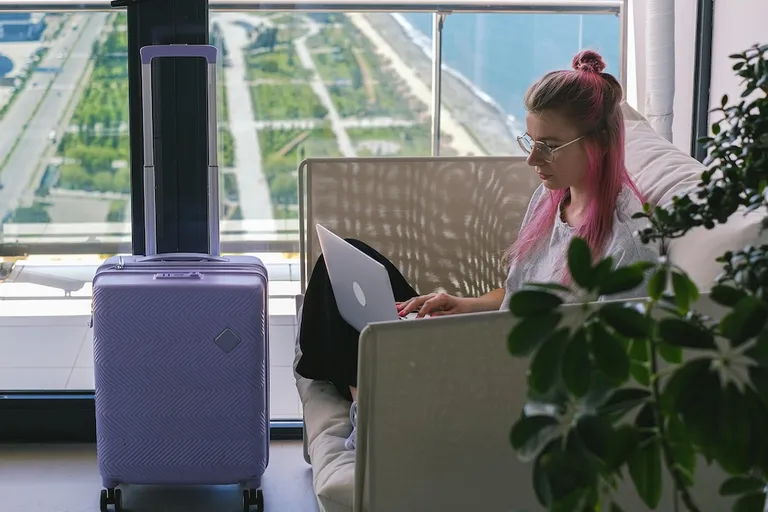
Be sure to book air-conditioned accommodation and confirm this before you arrive, not on arrival. Keep oral hydration steady throughout the day; dehydration amplifies fatigue. If your schedule allows, Thailand's cooler season – from November to February – offers the most manageable conditions for daily functioning.
Fatigue from heat is not the same as a medication failure
Increased fatigue, difficulty concentrating, and restlessness in Thailand's heat are frequently environmental rather than a sign that your medication is not working. Try a 30-minute rest in an air-conditioned space and ensure you're adequately hydrated before concluding your treatment needs adjustment. If these symptoms persist for more than 48 hours despite managing heat and sleep, follow the guidance in the Emergency tab and contact your home specialist.
Thai phrases for clinicians
Show your Nomedic IPS first – it removes the need to explain your diagnosis verbally. If verbal communication is needed:
“ฉันเป็นโรคสมาธิสั้น (ADHD)”
I have ADHD.
“ฉันกำลังมีปัญหาจากอาการของโรคสมาธิสั้น”
I am having difficulty due to my ADHD symptoms.
“ฉันต้องการพบจิตแพทย์”
I need to see a psychiatrist.
“ฉันใช้ยาเมทิลเฟนิเดตสำหรับโรคสมาธิสั้น”
I take methylphenidate for ADHD.
“แผนกจิตเวชอยู่ที่ไหน?”
Where is the psychiatry department?
“ฉันต้องการยาสำรองฉุกเฉินสำหรับโรคสมาธิสั้น”
I need an emergency supply of my ADHD medication.
Insurance considerations
What to know about travel insurance
Many standard travel policies treat ADHD as a pre-existing condition and exclude related claims entirely unless you declare it and pay an additional premium. Emergency psychiatric care at a private international hospital in Bangkok can cost ฿3,000–฿8,000 (~$81–$216 / ~€75–€199) per consultation, with ongoing medication and follow-up costs on top.
What to look for in a policy
Not just 'pre-existing conditions covered'. Your condition should be named on the policy schedule.
Covers repatriation if local psychiatric care is insufficient or if your medication situation cannot be resolved in-country.
Covers emergency replacement if your medication is lost, damaged, or delayed in transit.
So someone can communicate with Thai clinicians on your behalf when language is a barrier.
What to declare at application
Declare thoroughly. Incomplete disclosure can invalidate your entire policy, not just the ADHD-related claim.
State whether your diagnosis is inattentive, hyperactive-impulsive, or combined presentation, as insurers may classify these differently.
Use the INN (methylphenidate, atomoxetine) alongside the brand name.
Note any period in the past 12–24 months where your condition required an unscheduled medical review.
Declare any co-occurring conditions such as anxiety disorder, depression, or sleep disorder, as these are commonly comorbid with ADHD.
Your policy number and emergency assistance line, saved alongside your IPS and accessible offline.
Thailand has no reciprocal healthcare agreement with EU or EEA countries, so your EHIC or GHIC card provides no entitlement to treatment in Thailand. All costs at both public and private facilities must be paid directly or covered by private travel insurance. Do not rely on your EHIC card in Thailand.
Emergency protocol
Getting to a Thai emergency department
A mental health crisis related to ADHD – such as severe executive dysfunction, acute anxiety, or an associated depressive episode – requires prompt attention. Contact your travel insurer's 24-hour assistance line before going to hospital if your condition is not immediately life-threatening, as they can direct you to the most appropriate facility and arrange direct billing.
When you arrive – follow in order
Full clinical picture in seconds, no verbal explanation needed.
Hand your phone to the triage nurse:
ฉันเป็นโรคสมาธิสั้นและต้องการความช่วยเหลือจากจิตแพทย์
I have ADHD and need help from a psychiatrist.
Show your printed certificate and any remaining medication so the clinical team can verify your treatment and avoid any controlled-substance complications.
Thai clinicians need your full medication list, including any recent dose adjustments, before prescribing any new treatment.
Calls and location
Call 1669 for an ambulance in Thailand. Police: 191. If you're in Bangkok, major hospitals with 24-hour emergency departments include Bumrungrad International (+66 2 066 8888), Samitivej Sukhumvit (+66 2 022 2222), and Bangkok Hospital (+66 2 310 3000). State your hotel name and nearest landmark when calling, as street addresses can be complex in Thai cities.
In hospital
Methylphenidate and atomoxetine both interact with cardiovascular medications and certain anaesthetics. If you require surgery or sedation, ensure the treating team is aware of your current ADHD medication, dose, and timing of your last dose – your Nomedic IPS documents this automatically.
After any emergency
Before you leave the hospital if possible.
Required for insurer reimbursement and continuity of care when you return home.
Open Nomedic and tap Share to generate a QR code any clinician can scan.
Frequently asked questions
Is ADHD medication legal in Thailand?
Yes, common ADHD medications are legal to bring into Thailand, but the conditions differ by drug: methylphenidate (a Category 2 psychotropic substance) requires a physician certificate meeting six specific criteria and a maximum 30-day supply, while atomoxetine is not classified as a controlled substance and may be imported without a special certificate, though a standard prescription and original packaging are strongly recommended.
Can I bring my ADHD medication into Thailand?
Methylphenidate may be brought into Thailand in a quantity not exceeding 30 days' supply, accompanied by a printed physician certificate meeting Thai FDA requirements; amphetamine-based medications including lisdexamfetamine are prohibited and cannot be imported under any circumstances.
Never post your medication to Thailand
Postal import of controlled and psychotropic substances is illegal regardless of documentation.
Are ADHD medications available in Thailand pharmacies?
Methylphenidate (Ritalin, Concerta) is available in Thailand but only through hospital pharmacies attached to a psychiatry department, not from retail pharmacies; you must see a Thai psychiatrist who issues a local prescription before the hospital pharmacy will dispense it. Atomoxetine (Strattera) may be available at larger licensed pharmacies with a prescription. Amphetamine-based medications are not available through any legal channel in Thailand.
Do I need special travel insurance to visit Thailand with ADHD?
Standard travel policies frequently exclude ADHD as a pre-existing condition, meaning psychiatric consultations and medication replacement costs would not be covered. Thailand has no reciprocal healthcare agreement with any other country, so all medical costs are paid out of pocket without adequate cover; a private psychiatric consultation in Bangkok costs ฿1,500–฿5,500 (~$40–$148 / ~€37–€137) and emergency evacuation can cost significantly more.
Declare thoroughly
Subtype, current medication, last episode, associated conditions. Incomplete disclosure invalidates the entire policy, not just the ADHD-related claim.
How does Thailand's heat and humidity affect daily ADHD management?
Bangkok temperatures reach 35–37°C with humidity up to 79%, and overnight temperatures rarely fall below 23°C – conditions that directly compound sleep disruption and daytime fatigue. Planning cognitively demanding activities in the morning, using air-conditioned rest spaces during the hottest hours (12 pm – 3 pm), and maintaining hydration are the most effective practical strategies.
Best travel months
November to February offers the coolest and least humid conditions in Thailand. Daytime highs drop to 33–34°C and overnight temperatures are more comfortable, making this the most manageable period if you have flexibility over travel dates.
How can I communicate my ADHD diagnosis in an emergency in Thailand?
Show your Nomedic IPS first. If verbal communication is needed:
“ฉันเป็นโรคสมาธิสั้น (ADHD)”
I have ADHD.
“ฉันใช้ยาเมทิลเฟนิเดตสำหรับโรคสมาธิสั้น”
I take methylphenidate for ADHD.
What are the emergency numbers in Thailand?
Ambulance
1669
Police
191
Fire
199
Sources
- [1] Royal Thai Embassy Stockholm – Restricted Medicine for Travellers
- [2] The Oasis Care Thailand – Psychiatrist Service Fees
- [3] Lighthouse Counseling Center Bangkok – Psychotropic Medications in Thailand
- [4] Thai FDA — Guidance for Travelers under Treatment Carrying Personal Medications Containing Narcotics or Psychotropic Substances (v5, Sep 2024)
- [5] Thai FDA — Permit for Traveler online portal (Bureau of Narcotic Drugs and Psychotropic Substances)
- [6] Nishimura & Asahi — New Classification of Narcotics Under the Narcotics Code B.E. 2564 (2021)
- [7] Thai Law Online — Thailand Drug Laws: Penalties, Possession & Trafficking Offences under the Narcotics Code
- [8] INCB — Country Regulations for Travellers Carrying Personal Medications: Thailand (Sep 2024)
- [9] Royal Thai Embassy Washington, D.C. — Health Requirements (Bringing Prescriptions to Thailand)
More guides in Thailand
- CityChiang Mai Health Guide
- CityBangkok Health Guide
- CityPhuket Health Guide
- ConditionDiabetes in Thailand: Insulin Storage, Import Rules and Heat Management
- ConditionTransgender in Thailand: HRT Import Rules, Clinics and Hormone Access
- ConditionTravelling to Thailand with Anxiety Disorder: Medications, Healthcare and Emergency Protocols
- ConditionPregnancy in Thailand: Hospitals, Costs & Mosquito Risk
- MedicationAtomoxetine in Thailand: Strattera, Import Rules, and Pharmacy Access
- MedicationBenzodiazepines in Thailand: Controls, Brands and Pharmacy Access
- MedicationAdderall in Thailand: Category 1 Narcotic Ban, ADHD Plan
- MedicationAmphetamine / Dextroamphetamine in Thailand: Category 1 Ban and Legal Risk
- MedicationBuspirone in Thailand: Import Rules, Brands and Pharmacy Access
- MedicationConcerta in Thailand: Category 2 Status, Supply and Prescribers
- MedicationDexamfetamine in Thailand: Controls and Import Rules
- MedicationDiazepam in Thailand: Controls, Import Rules and Brands
- MedicationGuanfacine in Thailand: Import Rules, Brands and Prescribing
- MedicationInsulin in Thailand: Import Rules, Brands and Cold Chain
- MedicationLorazepam in Thailand: Controls, Import Rules and Pharmacy Access
- MedicationMedikinet in Thailand: Supply, Controls and Sibling Brands
- MedicationMelatonin in Thailand: Import Rules, Brands and Pharmacy Access
- MedicationMethylphenidate in Thailand: Category 2 Rules, Brands and Permits
- MedicationRitalin in Thailand: Hospital-Only Access, IR vs Concerta
- MedicationSemaglutide in Thailand: Import Rules, Heat Storage and Brands
- MedicationVyvanse (Lisdexamfetamine) in Thailand: Category 1 Ban, Legal Risk and Alternatives
- MedicationXanax in Thailand: Legal Status, Supply and Prescribers