
Travelling to Mexico with Diabetes: Medications, Healthcare and Emergency Protocols
Manage diabetes safely in Mexico: medication import rules, local brand names, insulin storage in the heat, and emergency protocols.
Diabetes in Mexico: what changes when you travel
Mexico's climate ranges from tropical coastal heat exceeding 35°C (95°F) to the temperate plateau of Mexico City at 2,240 metres above sea level. Both extremes affect insulin stability, glucose levels, and your ability to keep supplies cold.
The private healthcare system is accessible and relatively affordable, but foreign prescriptions are not automatically honoured at Mexican pharmacies, and public IMSS and ISSSTE facilities are reserved for enrolled contributors, not visiting travellers.
This guide covers medication import rules under COFEPRIS (Mexico's health regulator), local brand names, cold-chain management in the heat, finding an endocrinologist, emergency communication phrases, and why carrying your International Patient Summary (IPS) on Nomedic is the single most useful step you can take before you fly.
Medical disclaimer: This guide is for informational purposes only and does not constitute medical advice. Always consult your specialist before travelling, particularly regarding changes to your treatment schedule, vaccination requirements, and travel insurance.
Key risks for diabetes travellers in Mexico
Insulin degradation in the heat
Coastal regions such as Cancún and Puerto Vallarta regularly exceed 32°C (90°F) with humidity above 70%, and temperatures in hottest inland cities have reached 45°C (113°F) during recent heat waves. Insulin exposed to temperatures above 30°C for extended periods loses potency; see the cold-chain section in the In Country tab for detailed management steps.[4]
Foreign prescriptions are not accepted at pharmacy
Mexican pharmacies dispense most diabetes medications without a local prescription, but a prescription from outside Mexico will not always be accepted as a substitute for a Mexican prescription (receta). Carry your original packaging, a letter from your prescribing specialist in Spanish, and your Nomedic IPS to support any supply request.[1]
Altitude and glucose disruption in Mexico City and other highland cities
Mexico City sits at 2,240 metres above sea level. Altitude affects appetite, physical exertion, and glucose readings in some people. Monitor levels more frequently during the first 48 hours in any highland city and keep fast-acting glucose readily available.
Travellers' diarrhoea and glucose instability
Gastrointestinal illness from contaminated water or food is common in Mexico and can cause unpredictable glucose swings. Drink only bottled or purified water, use oral rehydration salts if dehydrated, and know your sick-day rules before you travel.
Limited public healthcare access for foreign visitors
Mexico's public system (IMSS, ISSSTE) is largely unavailable to non-enrolled visitors. Private clinics are accessible but require upfront deposits of MXN 5,000–100,000 (~$250–$5,000 / ~€230–€4,600) for non-emergency admissions. Comprehensive travel insurance is essential.[3]
Preparation checklist
- Book a pre-travel endocrinologist review – Confirm your regimen is stable, update your specialist letter, and ask for sick-day rules for travellers' diarrhoea in Mexico's climate.
- Get your specialist letter translated into Spanish – Mexican customs and pharmacies require documentation in Spanish; arrange translation before you fly.
- Build your Nomedic IPS – Store your diagnosis, medications (INN and brand), allergies, and emergency contacts in your International Patient Summary for offline access.
- Pack double your usual supply – Carry at least twice the medication you expect to need, split between carry-on and a trusted companion's bag if travelling with others.
- Research cold-chain options at your accommodation – Confirm your hotel room has a fridge or ask the reception to store insulin; beach resorts sometimes have limited facilities.
- Check COFEPRIS controlled-substance lists – Verify your medications are not classified under Mexico's Lista Roja before departure to avoid customs issues.
- Pack a FRIO or insulated pouch – Essential for day trips in coastal or desert heat where you won't have access to refrigeration for several hours.
- Save Mexico's emergency number offline – 911 covers ambulance, police, and fire in Mexico; save it in Nomedic under emergency contacts.
- Download an offline translation app – Prepare Spanish phrases for common hypoglycaemia and hyperglycaemia scenarios in case verbal communication is needed.
- Arrange travel insurance declaring diabetes explicitly – Confirm the policy schedule names diabetes, not just 'pre-existing conditions', before purchasing.
Documents to carry when travelling to Mexico with diabetes
Mexico customs officers and private hospital admissions teams will ask for documentation supporting your medications. Store all documents in the Nomedic app so they are accessible offline, even without a local SIM.
Your International Patient Summary (IPS)
Your Nomedic IPS is a structured, machine-readable summary of your diabetes diagnosis, current medications (generic and brand names), allergies, and functional status. It meets the HL7 FHIR IPS standard and can be shared via QR code with any clinician, regardless of the language they speak.
In Mexico, where a private emergency department may see you without prior clinical context, handing over your QR code immediately removes the need to explain your regimen verbally. Your IPS also satisfies item 1 of the checklist below automatically.
Full document checklist
Keep the following accessible on your phone and ready to share. Your Nomedic IPS covers items 1 and 6 automatically.
- ·Your Nomedic IPS Covers your diabetes diagnosis, current medications with INN and brand names, allergies, and functional status. Accessible offline with QR sharing.
- ·Specialist letter in Spanish Must state your diagnosis, all medications by INN and brand name, and confirm medical necessity for carrying syringes or pens through customs.
- ·Prescriptions with INN names Carry the original packaging with your name on the label, and a copy of the prescription listing both the INN and brand name for each medication.
- ·Travel insurance schedule Policy number, insurer name, and 24-hour assistance line saved in your Nomedic profile and as a screenshot on your phone.
- ·CGM or device documentation If you use a continuous glucose monitor or insulin pump, carry the manufacturer's letter confirming it is a medical device for airport security.
- ·Mexico emergency number 911 (ambulance, police, fire). Saved offline in your Nomedic emergency contacts.
Bringing your diabetes medications to Mexico[1]
You may bring a personal supply of medication into Mexico sufficient for the duration of your stay. COFEPRIS (Comisión Federal para la Protección contra Riesgos Sanitarios), Mexico's health regulator[9], requires that the quantity carried does not exceed what is listed on your prescription or doctor's letter. You must declare medications at customs, carry them in original packaging in hand luggage, and have a prescription or specialist letter translated into Spanish.[1]
Do not post your medication to Mexico.
Sending prescription medication through international post or courier to Mexico is not permitted for personal import. Always carry your full supply in person in hand luggage, declared at customs with supporting documentation.
Diabetes medications: brand names, INNs, and availability in Mexico
Major brand-name insulins (Lantus, Humalog, NovoLog) and oral agents (metformin generics, Januvia, Forxiga, Jardiance) are stocked at large pharmacy chains across Mexico. Ask for the INN if the brand name you use is not recognised.[6]
Over 34 generic formulations registered in Mexico; widely available at all pharmacy chains.
Requires refrigeration 2–8°C; once opened, stable up to 30 days at room temperature below 30°C.
Requires refrigeration 2–8°C; once opened, stable up to 28 days at room temperature below 30°C.
Requires refrigeration 2–8°C; once opened, stable up to 28 days at room temperature below 30°C.
Store below 30°C; available at major pharmacy chains in Mexico.
Cold-chain required; available at large pharmacy chains in Mexico, prescription requirements vary by pharmacy.
Store below 30°C; available in Mexico.
Store below 30°C; available in Mexico.
Metformin and iodinated contrast agents in Mexican radiology
If you require any imaging procedure using iodinated contrast (e.g. CT scan with contrast) in a Mexican hospital, inform the radiologist or emergency physician that you take metformin. Metformin should normally be withheld for 48 hours after contrast administration due to the risk of contrast-induced nephropathy and lactic acidosis. This rule applies regardless of which brand name appears in your record.
Travelling with injectable therapies
If your regimen includes insulin pens, prefilled syringes, or GLP-1 receptor agonist pens, these steps apply regardless of which Mexican city you are visiting.
- ·Carry in hand luggage only The International Air Transport Association (IATA) guidelines permit diabetic passengers[10] to carry insulin, pens, lancets, and glucose monitoring devices in cabin baggage with supporting medical documentation. Never pack temperature-sensitive medication in checked luggage, where hold temperatures can drop below freezing or exceed 40°C.
- ·Declare at security Inform security staff before screening that you are carrying insulin pens, needles, and a glucose monitor. Show your specialist letter and Nomedic IPS if asked for documentation. Needles must remain capped at screening.
- ·Maintain the cold chain Unopened insulin must be kept at 2–8°C. Use a FRIO wallet or insulated pouch with ice packs for transit. Once opened, most analogue insulins are stable at temperatures below 30°C for 28 days, but Mexico's coastal heat regularly exceeds this threshold.[7]
- ·Book direct flights where possible Each aircraft connection creates an additional cold-chain risk window, particularly during long tarmac waits in hot climates.
Your medication list, ready to share.
Nomedic stores your medication name, INN, dosage, and frequency — readable by any clinician worldwide.
Healthcare and prescriptions in Mexico
Mexico's healthcare system is divided into a public sector (IMSS, ISSSTE, and the Secretaría de Salud network)[8] and a private sector. Foreign visitors cannot access IMSS or ISSSTE as these are reserved for enrolled Mexican workers and their dependants. [3]
Private clinics and hospitals are open to all patients and do not require prior enrolment. A private specialist consultation (consulta con especialista) typically costs MXN 800–1,500 (~$40–$75 / ~€37–€69) at a clinic in Mexico City, Guadalajara, or Monterrey; private emergency department attendance can cost considerably more and usually requires an upfront deposit.[3]

Foreign prescriptions are not automatically honoured at Mexican pharmacies (farmacias). Pharmacies in large chain stores (Farmacia Guadalajara, Farmacias del Ahorro, Benavides) will dispense most diabetes medications without a local prescription, but insulin and GLP-1 agents are sometimes requested with documentation. For controlled or restricted medications, bring your COFEPRIS-compliant documentation and your specialist letter in Spanish.
Insulin and GLP-1 agents are dispensed differently to oral agents
Insulin and GLP-1 receptor agonist pens (Ozempic, Trulicity) are kept refrigerated at pharmacy chains in Mexico and are generally available in major cities. Smaller rural pharmacies may not stock analogue insulins, so identify the nearest large chain pharmacy at your destination before you arrive. Bring your Nomedic IPS and specialist letter to any supply request in case staff require documentation.
Finding a diabetes specialist
The specialist you need is an endocrinólogo (endocrinologist) or médico internista (internal medicine physician) with diabetes experience. Private hospital departments (consultorios de endocrinología) exist in major cities including Mexico City (e.g. Médica Sur's Endocrinology Centre, ABC Medical Center), Guadalajara, Monterrey, and Cancún. Walk-in appointments are possible at some private clinics; others require booking in advance, typically with a wait of one to three business days. Identify the nearest private hospital with an endocrinology department at your destination before you travel, and save the phone number and address offline.[2]
Search for providers near your destination
Use Nomedic's provider search to find diabetes specialists in Mexico. Save the address and phone number offline before you travel.
If your cold chain breaks in Mexico
A brief temperature excursion does not automatically mean your insulin is ruined. Most opened analogue insulin vials and pens tolerate up to 28–30 days at temperatures below 30°C once in use. The critical risk is prolonged heat exposure above 30°C, which is easily reached in coastal Mexico. Check the specific product information for your insulin type, as tolerance windows vary between brands.[7]
- ·Immediate local action Ask hotel reception to store your insulin in their refrigerator (refrigerador or nevera) immediately. All hotels with room service will have refrigeration. If you're at a beach or outdoor venue, ask the nearest farmacia (pharmacy) if they can store it temporarily – large chains do this routinely.
- ·Contact your home specialist Before discarding potentially affected insulin, ask your specialist whether the product can still be used based on the specific exposure duration and temperature.
- ·Local replacement if needed Lantus, Humalog, NovoLog, Basaglar, and major GLP-1 pens are stocked at Farmacia Guadalajara, Farmacias del Ahorro, and Benavides branches in most cities. Bring your Nomedic IPS and specialist letter. If your brand is unavailable, ask the pharmacist for the equivalent INN (see the table in the Medications tab) and consult your specialist before switching.
Managing heat and food safety in Mexico
Mexico's two primary day-to-day risks for diabetes travellers are heat and gastrointestinal illness. Coastal regions exceed 32°C (90°F) with high humidity for much of the year, and during spring and summer, inland cities such as Monterrey have recorded temperatures above 45°C (113°F). Travellers' diarrhoea from contaminated water or street food can cause rapid glucose swings.[5]
Plan outdoor activities before 10 am and after 5 pm when coastal temperatures are at their lowest. Air-conditioned shopping centres (centros comerciales), museums, and pharmacies are reliable refuges during midday heat.
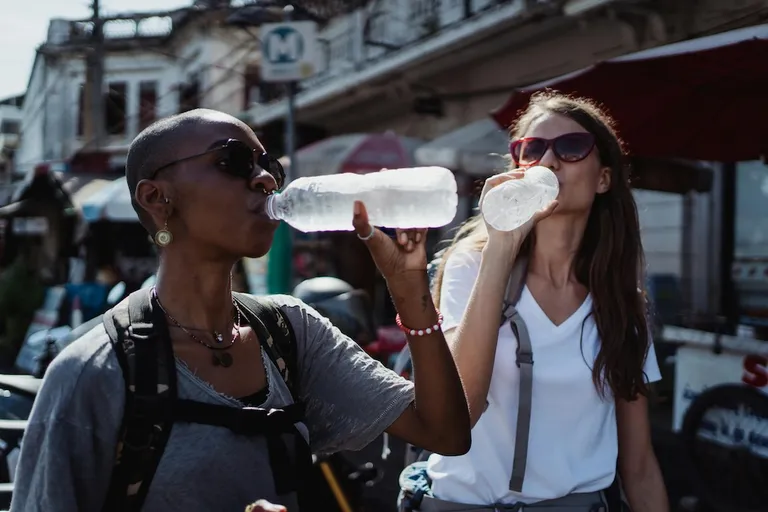
Drink only bottled or purified water (agua purificada is widely sold in convenience stores and farmacias) and apply your sick-day protocol if diarrhoea develops, using oral rehydration salts (suero oral) available over the counter.
Monitor glucose more frequently when physical activity, heat, or illness disrupts your usual pattern. Mexico City's higher altitude means physical exertion may feel greater than expected – reduce intensity for the first 24–48 hours after arrival and test more often.
Increased glucose variability is not automatically a crisis
Heat, changed meal timings, physical activity, and gastrointestinal illness can all shift your glucose levels without representing a medical emergency. Apply your sick-day rules, rest in a cool environment, and test frequently. If glucose remains outside your personal safe range for more than two to three hours despite your usual corrections, or if you develop vomiting that prevents oral intake, follow the guidance in the Emergency tab.
Spanish phrases for clinicians
Show your Nomedic IPS first – it removes the need to explain your diagnosis verbally. If verbal communication is needed:
“Tengo diabetes.”
I have diabetes.
“Estoy teniendo una crisis de azúcar en la sangre.”
I'm having a blood sugar episode.
“Necesito ver a un endocrinólogo.”
I need to see an endocrinologist.
“Tomo insulina y metformina para mi diabetes.”
I take insulin and metformin for my diabetes.
“¿Dónde está la farmacia o clínica más cercana con endocrinólogo?”
Where is the nearest pharmacy or clinic with an endocrinologist?
“Necesito un suministro de emergencia de insulina.”
I need an emergency supply of insulin.
Insurance considerations
What to know about travel insurance for Mexico with diabetes
Many standard travel insurance policies exclude complications arising from a pre-existing condition unless it is specifically declared and accepted at the time of application. Emergency hospitalisation at a private hospital in Mexico can cost MXN 50,000–300,000+ (~$2,500–$15,000 / ~€2,300–€13,800) depending on the severity, making adequate cover essential before you depart.
What to look for in a policy
Not just 'pre-existing conditions covered'. Your condition should be named on the policy schedule.
Covers repatriation to your home country if local care is insufficient for your needs.
Covers emergency replacement if your insulin or other diabetes medication is lost, damaged, or delayed in transit.
So someone can communicate with Mexican clinicians on your behalf and help coordinate care.
What to declare at application
Declare thoroughly. Incomplete disclosure can invalidate your entire policy, not just the diabetes-related claim.
Type 1, type 2, LADA, MODY – state the exact classification your specialist uses.
Use the INN alongside the brand name. Include insulin type and any non-insulin agents.
Most insurers request recent glycaemic control data to assess risk.
Declare hypertension, neuropathy, retinopathy, nephropathy, or cardiovascular disease if applicable.
Your policy number and emergency assistance line, saved alongside your IPS and accessible offline.
The EHIC and GHIC apply only within the European Economic Area and Switzerland. Mexico has no reciprocal healthcare agreement with EU or EEA member states. Your EHIC provides no entitlements at Mexican hospitals, so full travel insurance covering diabetes is essential regardless of your home country's card.
Emergency protocol
Going to the emergency department with a diabetes crisis
A severe hypoglycaemic episode (loss of consciousness, seizure, or inability to self-treat) and symptomatic hyperglycaemia with vomiting or altered consciousness both require immediate emergency department attendance. Before travelling to the hospital, contact your travel insurer's 24-hour assistance line so they can direct you to a covered facility and pre-authorise treatment.
When you arrive – follow in order
Full clinical picture in seconds, no verbal explanation needed.
Hand your phone to the triage nurse:
Tengo diabetes. Estoy en una emergencia médica. Por favor llame a un médico.
I have diabetes. I am having a medical emergency. Please call a doctor.
Show the medication table in your Nomedic IPS or read out the INN names from your specialist letter.
Alert the team if you take metformin before any imaging with contrast is ordered, as it must be withheld after contrast exposure.
Calls and location
Call 911 for ambulance, police, or fire anywhere in Mexico. This single number covers all emergency services nationwide. If you are near a large private hospital (hospital privado), it may be faster to take a taxi directly to their urgencias (emergency department) than to wait for an ambulance in tourist areas.
In hospital
Inform the treating clinician that you have diabetes before any wound is assessed or sutured. Slower healing and higher infection risk affect wound management decisions. This is especially relevant in Mexico's humid coastal environment.
After any emergency
Before you leave the hospital if possible.
Required for insurer reimbursement and continuity of care with your home specialist.
Open Nomedic and tap Share to generate a QR code any clinician can scan.
Frequently asked questions
Is diabetes medication legal in Mexico?
Yes, diabetes medications are legal to bring into Mexico, provided you carry a personal supply sufficient only for your stay, keep medications in their original packaging, declare them at customs, and carry a prescription or specialist letter translated into Spanish, as required by Mexico's health regulator COFEPRIS.
Can I bring my diabetes medication into Mexico?
You may bring a quantity sufficient for your trip, carried in original packaging in hand luggage with a Spanish-language prescription or specialist letter. The quantity must not exceed what is stated on your prescription or doctor's note.[2]
Do not post medication to Mexico
Sending prescription medication by post or courier for personal use is not permitted under Mexican import rules.
Are diabetes medications available in Mexico pharmacies?
Most oral diabetes agents and major insulin brands (Lantus, Humalog, NovoLog, Ozempic, Jardiance) are available at large pharmacy chains such as Farmacia Guadalajara and Farmacias del Ahorro in major cities; smaller rural farmacias may not carry analogue insulins, so identify a large chain outlet near your accommodation before you travel.[9]
Do I need special travel insurance to visit Mexico with diabetes?
Standard travel insurance policies often exclude complications from pre-existing conditions unless explicitly declared and accepted. Private emergency hospitalisation in Mexico can cost MXN 50,000–300,000+ (~$2,500–$15,000 / ~€2,300–€13,800) and private hospitals require upfront deposits, making comprehensive declared cover essential.[5]
Declare thoroughly
Diabetes type, current medication, last HbA1c result, and associated conditions. Incomplete disclosure invalidates the entire policy, not just the diabetes-related claim.
How can I communicate my diabetes diagnosis in an emergency in Mexico?
Show your Nomedic IPS first. If verbal communication is needed:
“Tengo diabetes.”
I have diabetes.
“Tomo insulina y metformina para mi diabetes.”
I take insulin and metformin for my diabetes.
How does Mexico's heat and humidity affect insulin storage?
Coastal Mexico regularly exceeds 32°C (90°F) with high humidity, and heatwaves in inland cities have pushed temperatures above 45°C. Opened analogue insulins tolerate temperatures below 30°C for 28–30 days, but this threshold is easily exceeded outdoors on Mexico's coasts.[7]
Use a FRIO wallet
A FRIO evaporative cooling wallet keeps insulin within the safe temperature range for several hours without ice. Essential for beach days, tours, and any time you are away from hotel refrigeration for more than two hours.
What are the emergency numbers in Mexico?
Ambulance
911
Police
911
Fire
911
Mexico uses a unified 911 system for all emergency services nationwide. In tourist areas, it may be faster to go directly to the urgencias (emergency department) of the nearest private hospital.
Sources
- [1] U.S. Embassy & Consulates in Mexico – Bringing Items into Mexico
- [2] Médica Sur – Endocrinology Centre, Mexico City
- [3] Mexico Relocation Guide – Healthcare options in Mexico: costs, insurance, IMSS
- [4] Inside Climate News – Heat is claiming Mexico's young people (2025)
- [5] Frontiers in Climate – Spring 2024: unprecedented atmospheric heatwaves in Mexico
- [6] T1International – Mexico: diabetes access and insulin availability
- [7] FDA – Prescribing information: ADMELOG (insulin lispro) storage and handling
- [8] Secretaría de Salud – Mexico's Federal Health Ministry
- [9] COFEPRIS – Personal-use medication import permit requirements
- [10] IATA – Travelling with medical conditions and diabetes supplies
More guides in Mexico
- CityMexico City Health Guide
- ConditionArthritis in Mexico: Methotrexate Import Rules, Biologics Access and Joint-Flare Planning
- ConditionHypertension in Mexico: Altitude, Heat and Medication Import Rules
- ConditionTravelling to Mexico with PCOS: Medications, Healthcare and Emergency Protocols
- ConditionADHD in Mexico: Adderall Ban, Methylphenidate Rules and Stimulant Access
- ConditionTravelling to Mexico with Lupus: Medications, Healthcare and Emergency Protocols
- MedicationAsthma Inhalers in Mexico: OTC Rules, Brands, Air Quality
- MedicationVyvanse in Mexico: Fracción II Status, Supply and Customs
- MedicationMethylphenidate in Mexico: COFEPRIS Permit, Ritalin and Pharmacy Access
- MedicationSemaglutide in Mexico: COFEPRIS, Cold Chain and Pharmacy
- MedicationAdderall in Mexico: COFEPRIS Rules and Counterfeit Risk
- MedicationOzempic in Mexico: Supply, Customs and Local Pharmacy Access
- MedicationAtomoxetine in Mexico: COFEPRIS Rules, Strattera Supply
- MedicationBenzodiazepines in Mexico: Controls, Brands and Import Rules
- MedicationConcerta in Mexico: COFEPRIS Status, Supply and Pharmacies
- MedicationDiazepam in Mexico: COFEPRIS Controls, Valium and Import Rules
- MedicationGuanfacine in Mexico: COFEPRIS, Import Rules and Availability
- MedicationInsulin in Mexico: Prescription Rules, Brands and Cold Chain
- MedicationMelatonin in Mexico: Import Rules, Brands and Pharmacy Access
- MedicationRitalin in Mexico: IR Formulation, Supply and Prescribers
- MedicationXanax in Mexico: Controls, Supply and Prescribing