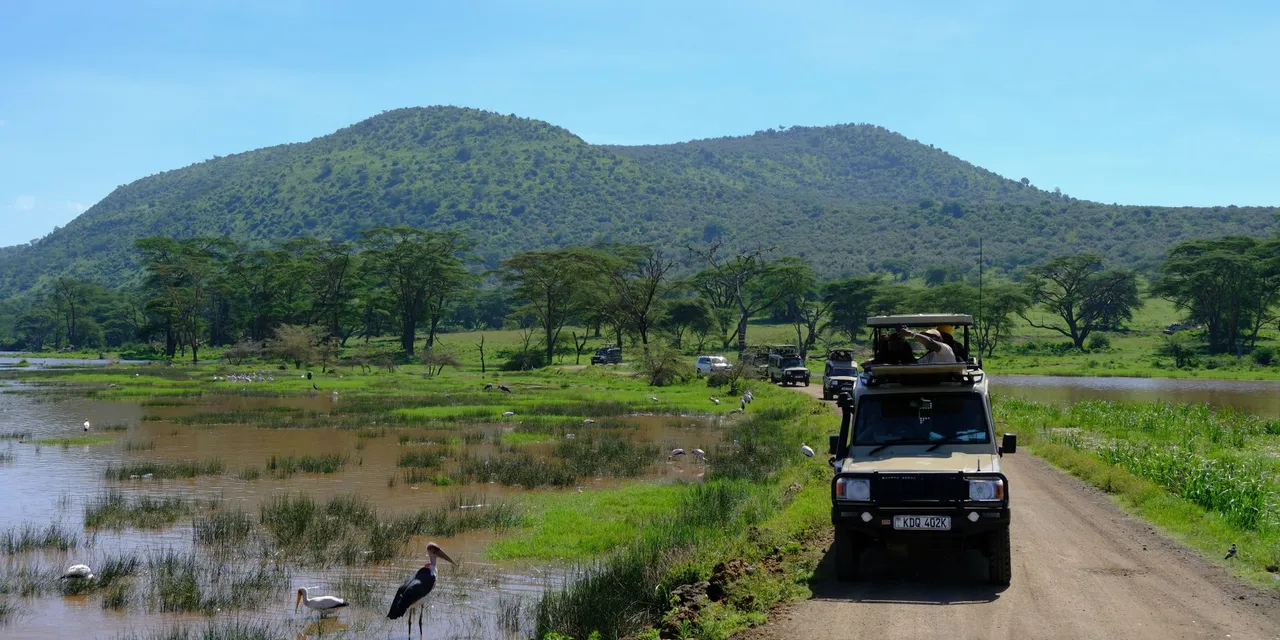
Diabetes in Kenya: Insulin Cold Chain, Heat Risk and Pharmacy Access
Kenya's heat, limited cold-chain infrastructure outside Nairobi, and import rules create specific planning needs for diabetes travellers.
Diabetes in Kenya: what changes when you travel
Kenya's equatorial heat, variable altitude across the country, and limited cold-chain infrastructure outside Nairobi[5] create specific challenges for insulin storage and medication management. Private hospitals in Nairobi stock a reasonable range of diabetes medications, but rural areas and safari destinations have very limited pharmacy coverage[2].
This guide covers medication import rules, local brand names, insulin cold-chain steps, specialist access in Nairobi, emergency communication in Swahili and English, and what your International Patient Summary (IPS) does for you if you need urgent care.
Medical disclaimer: This guide is for informational purposes only and does not constitute medical advice. Always consult your specialist before travelling, particularly regarding changes to your treatment schedule and travel insurance.
Key risks for diabetes travellers in Kenya
Insulin degradation from heat
Nairobi sits at roughly 1,700 m altitude and averages 26°C, but coastal areas such as Mombasa regularly exceed 33°C with high humidity[5]. Without active refrigeration, insulin can degrade within hours in direct sun or a hot vehicle[3]; carry an insulated case and identify refrigeration at your accommodation before arrival.
Limited pharmacy coverage outside Nairobi
Outside Nairobi and Mombasa, pharmacies stocking insulin analogues or GLP-1 medications are scarce[1]. Bring your full supply plus a minimum 30% buffer; do not rely on in-country sourcing in national parks or upcountry safari areas.
Gastrointestinal illness affecting glucose control
Tap water in Kenya is not safe to drink without purification[8]. Gastrointestinal illness can disrupt carbohydrate absorption and medication timing; carry oral rehydration salts and discuss sick-day rules with your specialist before travel.
Altitude variation affecting glucose levels
Kenya ranges from sea level at the coast to over 5,000 m on Mount Kenya[5]. Even moderate altitude above 2,500 m can affect insulin sensitivity; consult your endocrinologist about monitoring frequency if trekking.
Emergency care quality outside Nairobi
Kenya's WHO IHR capacity score is 62/100[4], with human resources capacity scored at 40/100[4]. Medical evacuation to Nairobi or abroad may be required for complex emergencies; ensure your insurance includes evacuation cover.
Preparation checklist
- See your endocrinologist at least 4 weeks before travel — Discuss altitude effects, sick-day rules for Kenya's food and water risks, and any adjustments to monitoring frequency.
- Obtain a signed specialist letter in English — Kenya's clinicians work in English; the letter must name all medications by INN and brand, state your diagnosis and any devices you carry.
- Carry your full medication supply plus a 30% buffer — Insulin analogues and GLP-1 medications are not reliably available outside Nairobi; bring everything you need.
- Build your International Patient Summary on Nomedic — Your IPS stores your diagnosis, medications, allergies, and emergency contacts in a format any clinician can access offline.
- Confirm refrigeration at every accommodation before booking — Contact lodges and camps directly; do not assume a fridge is available in tented safari camps.
- Pack an insulated medication wallet with ice packs — Required for the equatorial heat on safari and coastal destinations; replace ice packs at your hotel daily.
- Obtain a blood glucose meter with extra test strips and lancets — Bring twice as many as you expect to need; replacements are difficult to source outside Nairobi.
- Purchase travel insurance that explicitly covers diabetes and evacuation — Evacuation from national park areas to Nairobi can take several hours by road or light aircraft.
- Save Kenya emergency numbers offline in Nomedic — Ambulance, police, and your nearest private hospital number saved without requiring data connectivity.
- Research the nearest private hospital to each destination on your itinerary — Nairobi Hospital and Aga Khan University Hospital are the primary referral centres; in upcountry areas, identify the nearest clinic before you arrive.
Documents to carry when travelling to Kenya with diabetes
Carry both digital and printed copies of each document; the Nomedic app stores your medical record and IPS offline, accessible without mobile data.
Your International Patient Summary (IPS)
Your IPS records your diabetes diagnosis, current medications with INN and dose, allergies, and emergency contacts in a standardised format readable by clinicians worldwide. In Kenya, where English is an official language, your IPS will be understood directly by hospital staff without translation.
Full document checklist
Keep the following accessible on your phone and ready to share. Your Nomedic IPS covers items 1 and 6 automatically.
- ·Your Nomedic IPS Covers your diabetes diagnosis, medications, allergies, and functional status. Offline and QR-shareable.
- ·Endocrinologist letter in English Must name all medications by INN and brand, confirm your diagnosis, and list any devices such as CGM sensors or insulin pumps[1].
- ·Original prescriptions with INN names Kenyan pharmacies require a local or valid foreign prescription[1]; carry originals plus photocopies.
- ·Travel insurance schedule Policy number and insurer's 24-hour line saved in your Nomedic profile.
- ·Device documentation If you use an insulin pump or CGM, carry the manufacturer's documentation confirming the device is medically necessary.
- ·
Bringing your diabetes medications to Kenya
Kenya's Pharmacy and Poisons Board regulates medication imports under the Pharmacy and Poisons Act (Cap. 244)[1]. Travellers may bring a personal supply of prescription medication for the duration of their stay, typically up to 90 days, accompanied by the original prescription and an endocrinologist's letter.
There is no controlled-substance classification for standard diabetes medications such as insulin, metformin, GLP-1 agonists, or SGLT2 inhibitors in Kenya; no import permit is required for personal quantities.
Do not post your medication to Kenya.
Postal import of prescription medications is prohibited under Kenyan customs regulations. Always carry all diabetes medications and devices in your hand luggage when flying.
Diabetes medications: brand names, INNs, and Kenya availability
The table below lists common diabetes medications, their INNs, and the brands most likely to be encountered at Nairobi private-hospital pharmacies.
Widely available in Nairobi pharmacies. Store below 30°C away from direct sunlight.
Requires continuous refrigeration at 2-8°C until opened. Available at major Nairobi private hospital pharmacies.
Requires refrigeration at 2-8°C until opened. Opened pen can be kept at room temperature below 30°C for up to 28 days.
Available at major Nairobi private pharmacies. No cold-chain requirement.
Limited availability outside Nairobi; bring full supply. Risk of urinary tract infection increases in hot, humid conditions.
Very limited availability in Kenya; bring full supply. Injectable form requires refrigeration at 2-8°C until first use.
Carbonic anhydrase inhibitors interact with metformin and SGLT2 inhibitors
Acetazolamide, sometimes used for altitude sickness on treks to high-altitude areas of Kenya, can increase the risk of lactic acidosis when combined with metformin and may compound dehydration effects with SGLT2 inhibitors. Discuss altitude medication options with your endocrinologist before travel.
Travelling with injectable therapies
If your regimen includes insulin or an injectable GLP-1 agonist, these steps apply for all flights into and within Kenya.
Refer to Nomedic's GLP-1 travel guide to learn more about cold-chain management for your medications.
Your medication list, ready to share.
Nomedic stores your medication name, INN, dosage, and frequency, readable by any clinician worldwide.
Healthcare and prescriptions in Kenya
Kenya's public health system, overseen by the Ministry of Health, provides limited access for international travellers[2]; there is no reciprocal healthcare agreement covering most nationalities. International travellers requiring specialist care should use private facilities. Nairobi Hospital and Aga Khan University Hospital are the main private referral centres for endocrinology.
A private endocrinologist consultation costs approximately KES 3,000 to KES 8,000 (~$23 to ~$62 / ~€21 to ~€54). Foreign prescriptions are not accepted at retail pharmacies in Kenya; a Kenyan clinician must issue a local prescription for any in-country dispensing. See Kenya's travel guide for broader healthcare system context.
Insulin and GLP-1 medications are dispensed at private-hospital pharmacies in Nairobi; Aga Khan University Hospital and Nairobi Hospital both stock a range of insulin brands. Outside Nairobi, availability falls significantly and you should not expect to replace specialist medications on short notice.
Insulin is dispensed through hospital pharmacies, not standard chemists
For emergency supply, go directly to the pharmacy at Nairobi Hospital or Aga Khan University Hospital, not a general retail chemist. Bring your IPS and endocrinologist letter; the dispensing pharmacist will require a local clinician's note to issue replacement stock.
Finding a diabetes specialist
Endocrinologists (daktari wa magonjwa ya homoni in Swahili) work in the outpatient departments of Nairobi Hospital and Aga Khan University Hospital Nairobi. Appointments are typically available within 24 to 48 hours at private centres.
Walk-in endocrinology consultations are not standard; contact the hospital's outpatient booking line before presenting. Identify the specialist centre nearest to each destination on your itinerary before you travel and find a specialist using Nomedic's provider search.
Search for providers near your destination
Use Nomedic's provider search to find diabetes specialists in Kenya. Save the address and phone number offline before you travel.
If your cold chain breaks in Kenya
An opened vial or pen of most rapid-acting and long-acting insulins can be kept at room temperature below 30°C for up to 28 days[3] according to EMA product information; check your specific product leaflet for the confirmed window. If your insulin has been exposed to temperatures above 30°C for more than a brief period, or has been frozen, treat it as potentially degraded and seek replacement.
Managing heat and food safety day to day in Kenya
The Kenyan coast, including Mombasa and Malindi, averages daily highs above 30°C year-round with humidity above 70%[5], accelerating insulin degradation and increasing the risk of dehydration. Tap water is not safe to drink without purification, and gastrointestinal illness is a documented risk that disrupts carbohydrate absorption and medication timing.
Drink only bottled or boiled water; avoid ice at restaurants unless the source is confirmed. Check your blood glucose more frequently during heat exposure and physical activity, such as game walks, as glucose levels can shift unexpectedly.
Carry fast-acting glucose snacks at all times, particularly on safari drives where meals are not at fixed intervals. In Nairobi, meals are typically served between 7 am and 9 am, noon and 2 pm, and 7 pm and 9 pm at hotels, which aligns reasonably with standard dosing schedules; on safari, meal timing can be irregular, so coordinate with your guide in advance.
Hypoglycaemia on a game drive is not the same as general fatigue
Heat, physical activity, and irregular meal timing can combine to lower blood glucose rapidly on safari. If you experience confusion, sweating, or tremor, treat immediately with fast-acting glucose rather than waiting to return to camp. If symptoms persist beyond 15 minutes after treatment, follow the guidance in the Emergency tab.
Swahili and English phrases for clinicians
Show your Nomedic IPS first, it removes the need to explain your diagnosis verbally. English is an official language and is used in all Kenyan hospitals; Swahili phrases are provided for situations where English is not immediately available.
“Nina ugonjwa wa kisukari.”
I have diabetes.
“Ninahitaji sukari haraka, ninahisi hypoglycemia.”
I need sugar quickly, I am having a hypoglycaemic episode.
“Ninahitaji daktari wa kisukari (endocrinologist).”
I need a diabetes specialist (endocrinologist).
“Ninatumia insulini kwa ugonjwa wa kisukari.”
I take insulin for diabetes.
“Hospitali ya karibu iko wapi?”
Where is the nearest hospital?
“Ninahitaji insulini ya dharura.”
I need an emergency supply of insulin.
Insurance considerations
What to know about travel insurance
Emergency hospitalisation for a diabetes-related crisis in a Nairobi private hospital can cost KES 100,000 to KES 500,000 (~$770 to ~$3,850 / ~€710 to ~€3,550), and medical evacuation flights add significantly more. Ensure your policy explicitly names diabetes and covers evacuation, not just emergency treatment.
What to look for in a policy
Not just 'pre-existing conditions covered'. Your condition should be named on the schedule.
Covers repatriation to your home country if local care in Kenya is insufficient.
Covers emergency replacement if your insulin or other medication is lost, damaged, or delayed.
So someone can communicate with Kenyan clinicians on your behalf.
What to declare at application
Declare thoroughly. Incomplete disclosure can invalidate your entire policy, not just the diabetes-related claim.
Type 1, Type 2, LADA, or MODY; how long you have been diagnosed.
Use the INN alongside the brand name.
Include any diabetic ketoacidosis, hypoglycaemic episodes requiring third-party assistance, or HHS events.
Neuropathy, nephropathy, retinopathy, cardiovascular disease, or hypertension.
Your policy number and emergency assistance line, saved alongside your IPS and accessible offline.
Kenya has no reciprocal healthcare agreement with the EU or EEA. An EHIC or GHIC card provides no coverage in Kenya. EU and EEA travellers require comprehensive private travel insurance with diabetes cover.
Emergency protocol
Getting to the emergency department
A hypoglycaemic episode that does not resolve within 15 minutes of oral glucose treatment, or symptoms of diabetic ketoacidosis such as nausea, vomiting, deep breathing, or altered consciousness, require emergency hospital care. Contact your travel insurer's 24-hour assistance line before or as soon as possible after presenting to hospital.
When you arrive, follow in order
Full clinical picture in seconds, no verbal explanation needed.
Hand your phone to the triage nurse:
Nina ugonjwa wa kisukari na ninahitaji msaada wa dharura.
I have diabetes and I need emergency help.
It lists your current medications, doses, and any known complications relevant to emergency treatment.
Tell the clinician the reading, when it was taken, and what you have already done to treat it.
Calls and location
Ambulance, police, and fire in Kenya: 999. Nairobi Hospital: +254 20 2845000. Aga Khan University Hospital Nairobi: +254 20 3662000. If you are in a remote area or national park, contact your safari operator's emergency line first, as road access to hospital may require coordination.
In hospital
Tell the attending clinician about your diabetes before any wound assessment or surgical procedure; impaired wound healing and infection risk are directly relevant to surgical and anaesthetic decisions. Ensure this is documented in your treatment notes.
After any emergency
Before you leave the hospital if possible.
Required for insurer reimbursement and continuity of care.
Open Nomedic and tap Share to generate a QR code any clinician can scan.
Frequently asked questions
Is insulin legal to bring into Kenya?
Insulin is legal to bring into Kenya for personal use. No import permit is required provided you carry the original prescription, an endocrinologist's letter, and a supply proportionate to your trip duration, generally up to 90 days.
Can I get insulin in Kenya if I run out?
Common insulin brands such as Humalog and Lantus are available at private hospital pharmacies in Nairobi, including Nairobi Hospital and Aga Khan University Hospital. Outside Nairobi, availability is unreliable; do not travel to safari destinations or coastal areas without a full supply.
Do not post medication to Kenya
Postal import of prescription medications is prohibited. Always carry your supply in person.
Are GLP-1 medications like Ozempic available in Kenyan pharmacies?
Semaglutide (Ozempic, Rybelsus) has very limited availability in Kenya. Some larger Nairobi private hospital pharmacies may stock it, but supply is inconsistent. Bring your full trip supply plus a buffer; do not rely on sourcing GLP-1 medications in Kenya.
What are the emergency numbers in Kenya?
Ambulance, police, and fire
999
Nairobi Hospital
+254 20 2845000
Aga Khan University Hospital Nairobi
+254 20 3662000
How do I communicate my diabetes diagnosis in an emergency in Kenya?
Show your Nomedic IPS first. English is an official language used in all Kenyan hospitals. If verbal communication in Swahili is helpful:
“Nina ugonjwa wa kisukari.”
I have diabetes.
“Ninatumia insulini kwa ugonjwa wa kisukari.”
I take insulin for diabetes.
How does Kenya's heat affect insulin storage on safari?
Temperatures in Kenya's game reserves, particularly in lower-altitude parks such as Amboseli and Tsavo, regularly exceed 35°C during the day. An unopened insulin vial exposed above 30°C for extended periods can degrade; always carry insulin in an insulated wallet with a gel ice pack and request refrigeration at your lodge each evening.
Contact your safari camp before arrival
Confirm that refrigeration is available for medications. Most established camps and lodges can accommodate this; tented bush camps may need advance notice to arrange a medical-grade cold box.
Do I need special travel insurance to visit Kenya with diabetes?
Standard travel policies frequently exclude pre-existing conditions including diabetes. Private emergency hospitalisation in Nairobi costs KES 100,000 to KES 500,000 (~$770 to ~$3,850 / ~€710 to ~€3,550) before evacuation costs are added. Purchase a policy that explicitly names diabetes, covers medical evacuation, and includes replacement medication cover.
Declare thoroughly
Subtype, current medication, last episode, associated conditions. Incomplete disclosure invalidates the entire policy.
Sources
- [1] Kenya — Pharmacy and Poisons Act, Cap 244 (hosted by InfoTrade Kenya)
- [2] Kenya Ministry of Health — Health System Overview
- [3] European Medicines Agency — Insulin Glargine (Lantus) Product Information
- [4] WHO IHR State Party Self-Assessment Annual Report (e-SPAR) 2025 — Kenya
- [5] Kenya Meteorological Department — Climate Data
- [6] Nairobi Hospital — Specialist Services
- [7] Aga Khan University Hospital Nairobi — Patient Services
- [8] WHO — Drinking Water Safety in Kenya