Asthma in China: Air Quality, Inhaler Access and Import Rules
China's air pollution, wildfire haze seasons, and pharmacy rules create specific challenges. Here's what to prepare before you fly.
Asthma in China: what changes when you travel
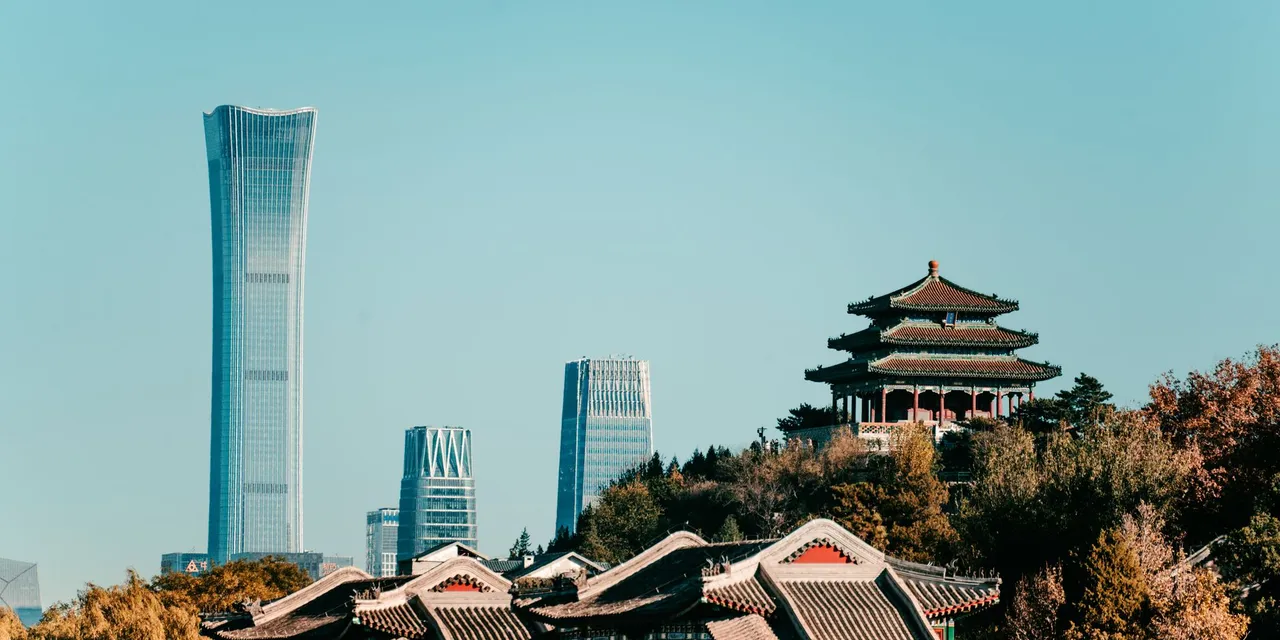
Beijing's air quality index regularly sits in the moderate-to-unhealthy range, with PM2.5 as the dominant pollutant. Seasonal coal heating in northern cities, industrial emissions, and periodic wildfire smoke from surrounding provinces compound urban pollution. China's public hospitals are accessible in emergencies, but foreign prescriptions are not accepted at retail pharmacies, and inhaler brand names differ substantially from those sold elsewhere[1].
This guide covers medication import rules, local brand names, how to access a respiratory specialist, and what to do if your inhaler supply runs low. It also covers pollution monitoring, seasonal risk periods, and emergency phrases in Mandarin Chinese.
Medical disclaimer: This guide is for informational purposes only and does not constitute medical advice. Always consult your specialist before travelling, particularly regarding changes to your treatment schedule and travel insurance.
Key risks for asthma travellers in China
Chronic urban air pollution
Beijing and other major cities record PM2.5 concentrations that regularly exceed WHO air quality guidelines.[4] Download a real-time AQI app (such as AirVisual or WAQI) before departure and carry a spare reliever inhaler at all times.
Seasonal haze and wildfire smoke
Northern China experiences heavy pollution episodes in autumn and winter from coal heating; southern and southwestern regions are exposed to wildfire smoke in spring and dry-season months. Check region-specific AQI forecasts at least 48 hours ahead of outdoor activities.[5]
Foreign prescriptions not accepted at retail pharmacies
Chinese pharmacies (药店, yào diàn) require a prescription issued by a registered Chinese physician to dispense prescription-only inhalers. Bring your full trip supply plus a contingency buffer of at least seven days.
Brand-name discontinuity
Most inhaler brands sold in China carry different trade names from those registered in Europe, North America, or Australia. Carry prescriptions using international nonproprietary names (INNs) so a Chinese physician can identify equivalent products.
Extreme temperature variation
Northern China winters routinely fall below -10°C, which can reduce inhaler propellant pressure and affect dose delivery. Keep pressurised metered-dose inhalers (pMDIs) in an inner pocket close to body temperature when outdoors in cold conditions.
Preparation checklist
- Book a pre-travel respiratory review — Confirm your current preventer and reliever prescriptions are up to date before departure.
- Obtain an INN-based specialist letter — Your pulmonologist or GP should write a letter naming each medication by its international nonproprietary name and your diagnosis in English and, ideally, Mandarin Chinese.
- Carry enough supply for your full trip plus seven days extra — Chinese pharmacies require a local prescription to dispense prescription inhalers; replacement is not guaranteed quickly.
- Check your travel insurance explicitly covers asthma exacerbations — Confirm the schedule names asthma, not just 'pre-existing conditions', and includes emergency evacuation.
- Download an AQI monitoring app — AirVisual and WAQI both cover major Chinese cities with real-time PM2.5 data; set an alert for AQI above 100.
- Create your Nomedic IPS before departure — Your diagnosis, medications, allergies, and emergency contacts are available offline and shareable by QR code with any clinician.
- Pack a KN95 or N95 mask — Recommended for high-pollution days; standard surgical masks provide insufficient PM2.5 filtration.
- Keep pMDIs in an inner pocket in cold weather — Sub-zero temperatures in northern China in winter reduce propellant pressure; body warmth maintains dose accuracy.
- Research the nearest international clinic at your destination — Large cities have international private clinics with English-speaking staff; locate one and save it offline.
- Save emergency numbers offline — Ambulance 120, Police 110. Save in your Nomedic profile for offline access.
Documents to carry when travelling to China with asthma
Chinese customs and pharmacy staff work from Chinese-language documentation; having your records in both English and Mandarin, stored in the Nomedic app, reduces delays at every point of contact.[2]
Your International Patient Summary (IPS)
Your Nomedic IPS holds your asthma diagnosis, current medications with INNs, allergies, and emergency contacts in a format any clinician worldwide can read. In China, where language barriers are significant, a QR-shareable IPS means a hospital triage nurse can read your full clinical picture without an interpreter.
Create or update your IPS at Nomedic before departure. The offline mode works without a SIM or VPN, which matters in areas with restricted internet access.
Full document checklist
Keep the following accessible on your phone and ready to share. Your Nomedic IPS covers items 1 and 6 automatically.
- ·Your Nomedic IPS Covers your asthma diagnosis, medications, allergies, and functional status. Offline and shareable by QR code.
- ·Specialist letter in English and Mandarin Must name each medication by INN, state your diagnosis, and confirm medical necessity for carrying inhalers.[2]
- ·Prescriptions with INN names Original prescriptions from your home prescriber, listing each medication by its international nonproprietary name as well as any brand name.[1]
- ·Travel insurance schedule Policy number and insurer's 24-hour assistance line, saved in your Nomedic profile for offline access.
- ·
- ·Emergency numbers Ambulance: 120. Police: 110.[12] Saved offline in your Nomedic profile.
Bringing your asthma medications to China
China's National Medical Products Administration (NMPA) governs medication import rules for personal use[1]. Travellers may carry a personal supply sufficient for their trip duration; the general accepted limit for prescription medications is a quantity consistent with personal use, typically up to three months.
Inhalers are not classified as controlled substances under Chinese law, so no import permit is required. Carry all inhalers in original packaging with the prescription and specialist letter.
Do not post your medication to China.
Posting prescription medication into China is prohibited under NMPA import regulations; parcels containing pharmaceuticals are routinely intercepted and destroyed by customs. Always carry your inhalers in person in hand luggage.
Asthma medications: brand names, INNs, and China availability
The table below lists common asthma-related medications with their INNs and the brand names registered in China under NMPA approval.
Store at room temperature, away from direct sunlight. Keep above 15°C in cold weather to maintain propellant pressure.
Rinse mouth after each use to reduce local fungal risk.
Rinse mouth after use. Cold storage not required.
Do not use as a reliever. Combination product; check device type matches your training.
Check that the Turbuhaler device is permitted in your inhaler technique plan.
Interaction with traditional Chinese medicines containing ephedra (ma huang)
Ephedra (麻黄, má huáng) is found in some traditional Chinese herbal preparations sold at pharmacies and herbal markets. It has sympathomimetic effects that can interact with beta-2 agonist inhalers and some asthma medications. Do not use ephedra-containing products without discussing them with your treating physician.
Travelling with pressurised inhalers: what to do at security
If you use pressurised metered-dose inhalers, the following steps apply at all Chinese airports and internal transit points.
Your medication list, ready to share.
Nomedic stores your medication name, INN, dosage, and frequency, readable by any clinician worldwide.
Healthcare and prescriptions in China
China operates a national health insurance system (基本医疗保险) that covers Chinese residents but not international travellers. For details on the wider health system, see China's travel guide. International travellers must pay out of pocket or through private travel insurance. Emergency treatment is available at any public hospital regardless of insurance status, but upfront payment or a deposit is typically required.
A private international clinic consultation costs approximately ¥800 to ¥2,000 (~$119 to ~$298 / ~€104 to ~€260); emergency department visits at public hospitals with an international patient department cost less but involve longer waits and Chinese-language administration.
Retail pharmacies (药店, yào diàn) stock salbutamol and some inhaled corticosteroids over the counter in certain formulations, but combination inhalers and biologic treatments require a prescription from a Chinese-registered physician. Foreign prescriptions are not accepted; if you need an emergency replacement, you must attend a hospital outpatient department or international clinic to obtain a Chinese prescription first.
Biologic and add-on therapies are dispensed differently
Biologic asthma treatments (such as omalizumab or dupilumab) are dispensed only through hospital specialist pharmacies in China, not retail pharmacies. If you run low, attend the respiratory or allergy department of a Grade 3 (三级) hospital with your Nomedic IPS and specialist letter.
Finding an asthma specialist
Respiratory physicians (呼吸科医生, hūxī kē yīshēng) work in the respiratory medicine departments (呼吸科) of Grade 2 and Grade 3 public hospitals across all major Chinese cities. International private clinics in Beijing, Shanghai, Guangzhou, Shenzhen, and Chengdu have English-speaking respiratory physicians and accept walk-in appointments.
Grade 3 hospitals are classified as the highest tier of the Chinese hospital system[3] and have the most complete specialist coverage. Identify the nearest international clinic or Grade 3 hospital respiratory department before you travel, and save the address and phone number offline.
Search for providers near your destination
Use Nomedic's provider search to find asthma specialists in China. Save the address and phone number offline before you travel.
If your inhaler supply runs low or is lost in China
Some reliever inhalers (salbutamol/Ventolin) are available at large retail pharmacy chains without a prescription in some Chinese cities, but this is not consistent. Do not rely on OTC availability; the following steps apply if your supply is lost or significantly depleted.
Managing air pollution and triggers day to day in China
PM2.5 is the primary airborne trigger in Chinese cities. Beijing's annual average PM2.5 concentration exceeds WHO's guideline of 5 µg/m³, with peak values in winter and during dust storm season in spring.
Check the AQI before outdoor activities each day. On days with AQI above 100, limit time outdoors and wear a KN95 or N95 mask rated for PM2.5 filtration. Major shopping malls, metro stations, and hotel lobbies are air-conditioned and filtered, providing indoor refuges during poor-air days. Refer to our air quality travel guide for more advice on monitoring the AQI and reducing respiratory risks.
In northern cities during winter heating season (roughly November to March), pollution peaks in the morning; outdoor exercise is best scheduled after 10 am when dispersion improves. Spring dust storms in northern and northwestern China (Inner Mongolia, Xinjiang, Gansu, Shaanxi) can elevate AQI to hazardous levels for 24 to 72 hours; check regional forecasts at the China National Environmental Monitoring Centre.[6]
A pollution-triggered wheeze is not the same as a severe exacerbation
Mild increased wheeze on a high-pollution day that resolves after moving indoors and using your reliever inhaler is a trigger response, not an emergency. If your reliever inhaler does not control symptoms within 20 minutes, or if you are breathless at rest, follow the guidance in the Emergency tab immediately.
Mandarin Chinese phrases for clinicians
Show your Nomedic IPS first, it removes the need to explain your diagnosis verbally. If verbal communication is needed:
“我有哮喘。”
I have asthma.
“我正在经历哮喘发作。”
I am having an asthma attack.
“我需要看呼吸科医生。”
I need to see a respiratory physician.
“我使用沙丁胺醇吸入器治疗哮喘。”
I use a salbutamol inhaler for asthma.
“最近的呼吸科在哪里?”
Where is the nearest respiratory department?
“我需要紧急补充吸入器。”
I need an emergency supply of my inhaler.
Insurance considerations
What to know about travel insurance
Many standard travel insurance policies exclude emergency respiratory treatment if asthma is declared as a pre-existing condition and not specifically covered. Private hospital emergency treatment in China can cost ¥3,000 to ¥30,000 (~$445 to ~$4,470 / ~€390 to ~€3,895) or more for an acute exacerbation requiring nebulisation or observation.
What to look for in a policy
Not just 'pre-existing conditions covered'. Your condition should be named on the schedule.
Covers repatriation to your home country if local care is insufficient.
Covers emergency replacement if your medication is lost, damaged, or delayed.
So someone can communicate with Chinese clinicians on your behalf.
What to declare at application
Declare thoroughly. Incomplete disclosure can invalidate your entire policy, not just the asthma-related claim.
State whether it is mild intermittent, mild persistent, moderate persistent, or severe persistent, and whether it is allergic or non-allergic.
Use the INN alongside the brand name.
Include whether it required oral corticosteroids, nebulisation, or hospitalisation.
Declare rhinitis, eczema, GERD, nasal polyps, or any other comorbidities.
Your policy number and emergency assistance line, saved alongside your IPS and accessible offline.
China has no reciprocal healthcare agreement with the EU or EEA, so an EHIC or GHIC card provides no cover in China. EU and EEA travellers must arrange comprehensive private travel insurance that explicitly covers asthma before departure.
Emergency protocol
Getting to the emergency department
A severe attack in China requires immediate emergency department attendance. Call 120 for an ambulance or ask your hotel to arrange urgent transport to the nearest Grade 3 hospital. Contact your travel insurer as soon as you are stable; pre-authorisation may be required for reimbursement.
When you arrive, follow in order
Full clinical picture in seconds, no verbal explanation needed.
Hand your phone to the triage nurse:
我有严重哮喘,呼吸困难,请帮我。
I have severe asthma and I am struggling to breathe, please help me.
The letter confirms your diagnosis and lists your current medications by INN, which helps the treating physician identify Chinese equivalents.
This helps triage severity and informs treatment decisions.
Calls and location
Ambulance: 120. Police: 110. Fire: 119. If you are in a hotel, ask reception to call and give the address in Chinese. Save your destination address in Chinese characters in your Nomedic profile before you travel.
In hospital
Some pain relief medications and anaesthetic agents can trigger bronchospasm. Tell the treating physician you have asthma and list your current inhalers before any procedure or medication is administered.
After any emergency
Before you leave the hospital if possible.
Required for insurer reimbursement and continuity of care with your home specialist.
Open Nomedic and tap Share to generate a QR code any clinician can scan.
Frequently asked questions
Are asthma inhalers legal to bring into China, and what are the import rules?
Yes, asthma inhalers — including salbutamol (albuterol) reliever inhalers and preventer inhalers such as inhaled corticosteroids and combination inhalers — are legal to bring into China for personal use. They are not classified as controlled substances under Chinese law, so no special import permit is required. Carry each inhaler in its original manufacturer packaging, bring a copy of your prescription or a letter from your prescribing doctor listing the medication by its International Nonproprietary Name (INN), and declare medications if asked at customs. Keep quantities to a reasonable personal-use supply (typically no more than three months' worth). Foreign prescriptions are not accepted at retail Chinese pharmacies, so carry sufficient stock for your entire trip.
Pack smart
Keep inhalers in carry-on luggage — hold temperatures and pressure changes can damage aerosol canisters. Bring at least one spare inhaler in case of loss or damage.
Can I bring my salbutamol inhaler into China without a prescription?
Salbutamol (albuterol) inhalers are not classified as controlled substances in China, so no import permit is required. Carry the inhaler in its original packaging with a specialist letter and prescription listing the medication by its INN; customs may inspect medication at ports of entry.
Are combination inhalers like Seretide or Symbicort available in Chinese pharmacies?
Seretide (salmeterol/fluticasone, 舒利迭) and Symbicort (budesonide/formoterol, 信必可) are registered in China and available at hospital pharmacies in major cities. A prescription from a Chinese-registered physician is required; foreign prescriptions are not accepted at retail pharmacies.
How bad is air pollution in Beijing for asthma?
Beijing's AQI frequently sits in the moderate range, with PM2.5 as the dominant pollutant. Annual average PM2.5 in Beijing exceeds the WHO guideline of 5 µg/m³, with worst conditions in winter (November to February) and during spring dust storms. Check AQI daily and limit outdoor time when it exceeds 100.
Real-time AQI in China
The WAQI platform (waqi.info) and AirVisual app both provide station-level PM2.5 data for hundreds of Chinese cities and are accessible without a VPN.
How do I say I have asthma in Mandarin Chinese?
Show your Nomedic IPS first. If verbal communication is needed:
“我有哮喘。”
I have asthma.
“我使用沙丁胺醇吸入器治疗哮喘。”
I use a salbutamol inhaler for asthma.
Is tap water safe to drink in China for someone taking inhaled corticosteroids?
Tap water is not safe to drink in China. For those using inhaled corticosteroids, rinsing the mouth after each dose with bottled or boiled water is important to reduce the risk of oropharyngeal candidiasis. Use bottled water for rinsing if tap water safety is uncertain.
Rinse routine
Always rinse your mouth and gargle with clean bottled water after using an inhaled corticosteroid. Swallow the water or spit; do not swallow the steroid residue.
Do I need special travel insurance to visit China with asthma?
China has no reciprocal healthcare agreement with any country, meaning all medical costs fall to the traveller or their insurer. Standard travel insurance policies frequently exclude pre-existing conditions including asthma; a policy that explicitly names asthma as covered is essential.
Declare thoroughly
Subtype, current medication, last exacerbation date, and associated conditions. Incomplete disclosure invalidates the entire policy.
What is the emergency ambulance number in China?
Ambulance
120
Police
110
Fire
119
Sources
- [1] National Medical Products Administration (NMPA) — China drug regulatory authority
- [2] National Health Commission of China — Hospital classification system
- [3] Civil Aviation Administration of China (CAAC) — Carry-on baggage rules for medications
- [4] Air Quality Life Index — China Fact Sheet
- [5] IQAir — China Air Quality Index
- [6] China National Environment Monitoring Centre (CNEMC)
More guides in China
- CityShanghai Health Guide
- ConditionHypertension in China: Medications, Heat Risk and Pharmacy Access
- ConditionSevere Allergies in China: Epinephrine Import Rules and Auto-Injector Access
- ConditionADHD in China: Amphetamine Ban, Methylphenidate Rules and Psychiatrist Access
- ConditionDiabetes in China: Insulin Import Rules, Heat Risk and Pharmacy Access
- MedicationAdderall in China: Amphetamine Ban, Legal Risk and ADHD Plan
- MedicationMethylphenidate in China: Controls, Supply and Prescriber Rules
- MedicationMelatonin in China: Import Rules, Availability and Storage
- MedicationRitalin in China: Controls, Supply and Prescriber Rules
- MedicationLisdexamfetamine in China: Amphetamine Ban, Legal Risk and ADHD Plan