The Cold Chain Problem: How to Travel with Insulin, Biologics and Refrigerated Medication
Cargo holds freeze. Gel packs melt. Customs officers ask questions. Here's exactly how to keep your cold-chain medication safe from door to destination when flying.
Travelling with insulin, biologics, & refrigerated meds
You may be itching to go on your travels but your medication doesn't care how excited you are. The moment you step outside your usual routine, the cold chain you rely on every day becomes your problem to manage, not your pharmacy's.
Insulin, biologics, plus a growing list of GLP-1 receptor agonists such as Ozempic, all share one critical vulnerability: temperature. Get that wrong, and the medication you're carrying may be unusable before you even arrive at your destination. This guide covers insulin and refrigerated medication generally. For specialised biologic classes see our guides on biologics for IBD and rheumatoid arthritis (adalimumab, infliximab), CGRP biologics for migraine prevention, and biologic controllers for severe asthma.
Medical disclaimer: This article provides general information for travellers and does not constitute medical advice. Regulations, prescription requirements, and product availability change. Consult your prescribing clinician before travelling and confirm destination-specific rules with the relevant national authority.
What 'cold chain' actually means for travellers
Most refrigerated medicines must stay between 2–8°C. For insulin, that range also refers to unopened stock. Biologics such as monoclonal antibodies are, if anything, more fragile: packaging typically states that any excursion outside 2–8°C is not permitted. Unlike small-molecule drugs, biologics cannot simply be thawed out after freezing and used again. The protein structure is changed, often irreversibly: a cold-chain medication that's been frozen is not a usable medication[4].
When it comes to flying with insulin and other refrigerated meds, the cargo hold of commercial aircraft isn't climate-controlled in the same way as inside the cabin. Indeed, temperatures in the hold can drop below freezing on long-haul routes. That's why all cold-chain medication belongs in your carry-on luggage, never in checked bags[8].
There's also a practical allowance that many travellers don't know about. Many modern insulin formulations can tolerate room temperature for limited periods once opened — commonly up to 28 days once a vial or pen is opened[3], though some pens are rated for only 14 or 21 days rather than 28. Some biologics have similar short-term allowances: etanercept, for instance, can be kept at room temperature (up to 25°C) for up to 14 days according to its prescribing information[5]. Always confirm the exact limit for your specific product with your pharmacist or prescriber before you travel, because these allowances vary by formulation and brand.
The 4 friction points that catch travellers out
Travelling with insulin, biologics, etc: 6 steps to take before leaving
At the airport: what to do and say
Tell the security officer that you're carrying medically necessary liquids and cooling equipment before your bag reaches the X-ray belt – don't wait to be asked. Declare your medication and place it in a separate bin. Medical liquids don't go in the standard liquids bag used for toiletries.
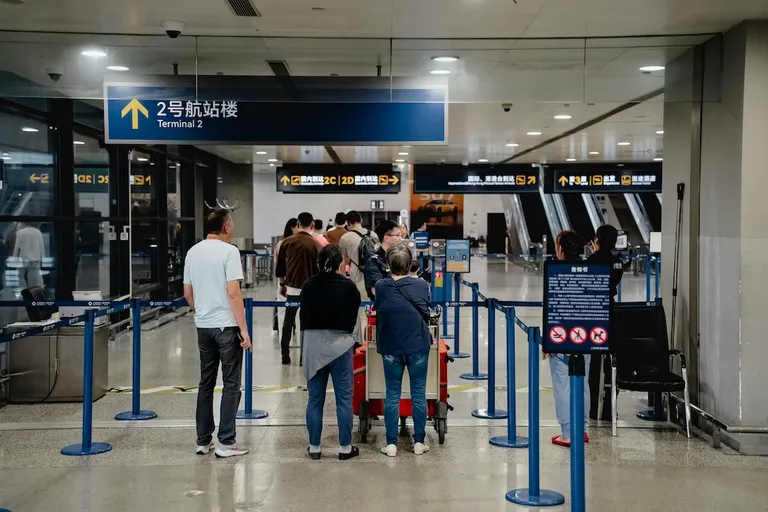
If you use a continuous glucose monitor (CGM), insulin pump, or any other electronic medical device worn on your body, notify the security officer before entering the scanner. You have the right to request a manual pat-down and a visual inspection instead of X-ray screening if you have concerns about the effect of scanning on your device. Ask the device manufacturer whether your specific model can safely pass through airport security scanners[2].
Allow extra time. Even with pre-check or fast-track lanes, carrying medical supplies can extend your security screening. Budget at least 30 additional minutes if you're carrying injectables, cooling equipment, and associated supplies.
On the flight: keeping your medication safe in the air
Store your medication in the overhead locker or under the seat in front of you, not in the seat pocket. Seat pockets experience wide temperature fluctuations, particularly during descent when cold air circulation from the aircraft exterior changes. The overhead locker, above your row, is typically the most stable environment on the plane.
Never place insulin or biologics in the overhead locker of a pressurised aircraft without insulation. Cabin temperatures can vary considerably, and the lockers closest to the exterior of the aircraft can be significantly cooler than ambient cabin temperature on polar routes[6].
On flights longer than four hours, speak to a flight attendant and ask whether ice is available for your cooling case. Most galleys carry ice but don't assume they'll offer you this without being asked.
At your destination: the first 24 hours
Locate refrigeration as soon as you check in. Hotels will almost always refrigerate medication on request. Explain that it's medically essential and ask for confirmation that the fridge is set between 2°C and 8°C. Do not assume that the minibar in your room maintains this temperature. In fact, many minibars run at 10–12°C, outside the safe range for most biologics[7].
If you need an emergency resupply, contact a local pharmacy or the nearest hospital's outpatient department with your doctor's letter and your IPS. Bear in mind that the same biologic may be sold under a different brand name internationally. Adalimumab, for instance, has multiple bio-similar versions on the market globally. Your IPS includes the generic medication name (INN), which helps pharmacists and clinicians identify the correct product regardless of brand.
The INN (International Nonproprietary Name) is the globally recognised name for every active ingredient. Knowing the INN for your medication is more useful at a foreign pharmacy than knowing the brand name alone.
Frequently asked questions
Can I carry insulin and biologics in my carry-on luggage?
Yes. Insulin, biologics, and all associated supplies including syringes and pen needles should always travel in your carry-on, not in checked baggage. Cargo hold temperatures can drop below freezing and may destroy temperature-sensitive medications. You must declare medically-necessary liquids to security officers and place them in a separate bin for screening. There's no volume limit for medical liquids, but quantities beyond 100ml should be declared proactively.
Do I need a doctor's letter to travel with injectable medication?
A doctor's letter is not always legally required at every airport, but is strongly recommended for all international travel. Some countries, including Japan, the UAE, and Singapore, require documentation for syringes and injectable medications. The letter should include your name, the medication's generic and brand name, the prescribed quantity, and a statement of medical necessity. Carry a printed copy as well as a digital version.
How long can insulin stay out of the fridge while I travel?
Most modern insulin formulations can tolerate room temperature for up to 28 days once a vial or pen is opened. Unopened stock must remain refrigerated between 2°C and 8°C. Insulin should never be exposed to direct sunlight, extreme heat, or freezing temperatures. The exact allowance varies by formulation, so confirm the limit for your specific product with your pharmacist before you travel.
What's the safest way to keep biologics cold on a long flight?
Pack your biologic in an insulated medication wallet with gel packs frozen solid before you leave home. Declare the cooling equipment at security. On flights longer than four hours, ask a flight attendant for ice to replenish your cooling case mid-flight. Contact your airline at least 48 hours before departure to ask whether onboard refrigerator storage is available for your medication. Never place biologics in the seat pocket or checked baggage.
What happens if my biologic gets too warm or freezes in transit?
Most biologics are irreversibly damaged by freezing. Package inserts for products such as adalimumab and golimumab state that any temperature excursion outside 2–8°C is not permitted. Do not use a biologic that has been frozen or that you suspect has been exposed to temperatures outside the approved range. Contact the manufacturer or a local pharmacist for guidance on whether the product can still be used. Your travel insurance policy may cover replacement costs if the medication was damaged due to a covered event.
Can I get my biologic or insulin refilled abroad if I run out?
Resupply abroad is possible but not guaranteed. Biologics in particular may be available under different brand names or as biosimilar versions. Carrying the generic (INN) name of your medication and your International Patient Summary (IPS) gives local pharmacists and clinicians the information they need to identify an equivalent product. Always carry at least double the quantity you expect to need, and check your destination country's import rules before you travel.
Does travel insurance cover insulin or biologic replacement if it is lost or spoiled abroad?
Standard travel insurance usually does not cover medication loss or spoilage unless your policy includes specific medical equipment or medication replacement cover. A single biologic dose can cost thousands of dollars to replace abroad. Declare insulin or biologic use at policy purchase and look for policies that explicitly cover medication damage, loss, or temperature excursions.
Is it legal to carry insulin and biologics through customs?
Yes. Insulin and biologics are not controlled substances, and medical liquids are exempt from the standard 100 ml liquid rule at most airports worldwide, provided you declare them separately and place them in their own tray for screening[2]. Customs is a separate matter from security. Officers in some countries want a doctor's letter listing the medication, the diagnosis, the quantity you are carrying and the prescribing clinician's contact details. Carry at least double what you expect to need[6], because flights are delayed, bags go missing, and the biologic your specialist prescribes at home may not be available at your destination.
Sources
- [1] American Diabetes Association – What Can I Bring With Me on the Plane
- [2] Transportation Security Administration – Insulin
- [3] UT Southwestern Medical Center – Travelling with Diabetes
- [4] PMC / Journal of Pharmaceutical Sciences – Grand Challenges in Pharmaceutical Research: Ridding the Cold Chain for Biologics
- [5] European Journal of Rheumatology – Survey on Transportation and Storage of Biological Therapies by Patients
- [6] WHO – Model Guidance for the Storage and Transport of Time- and Temperature-Sensitive Pharmaceutical Products
- [7] RheumNow – Problems with Biologic Drug Storage
- [8] CDC – Tips for Travelling with Diabetes
Topics
Related articles
- ArticleAntivirals at the Border: What Customs Officers Don't Tell You About Valaciclovir, Acyclovir, and Oseltamivir
- ArticleBlood Pressure Medication Abroad: Brand Swaps, Refill Rules, and Heat
- ArticleBiologics Don't Forgive a Broken Cold Chain: What Travellers on Adalimumab and Infliximab Must Know
- ArticleHepatitis B and C Antivirals Abroad: Where Your Prescription Survives the Border
- ArticleWhere Vyvanse and Elvanse Are Illegal: The Country-by-Country Legal Status List
- ArticleThe Pill Abroad: When Your Contraceptive Runs Out Mid-Trip