
Travelling to Spain with a Dental Issue: Healthcare, Pharmacies and Emergency Protocols
Spain's public system covers only emergency dental treatment for adults. Know your costs, pharmacies, and emergency steps before you fly.
Dental issues in Spain: what changes when you travel
Spain's Sistema Nacional de Salud (SNS) does not cover routine dental treatment for adults, meaning almost all dental clinics operate privately and you will pay out of pocket for anything beyond a genuine emergency. If this is the case, emergency stabilisation at a public hospital urgencias department is accessible to EHIC holders and to all travellers regardless of insurance status, but routine fillings, extractions and follow-up work are charged at private rates.
Additionally, Spain's summer heat can intensify dental pain and swelling, and locating a clinic in rural or island areas may require travelling to the nearest city.[3]
This guide covers medication import rules under Spanish law, local pharmacy access, how to find a dentist in Spain, cost ranges for common procedures, and the Spanish phrases you need in an emergency. Storing your dental history, current medications, and allergy status in your Nomedic International Patient Summary (IPS) means any Spanish clinician can access your records instantly, even if you don't speak Spanish.
Medical disclaimer: This guide is for informational purposes only and does not constitute medical advice. Always consult your dentist or specialist before travelling, particularly regarding changes to your treatment schedule, medication documentation, and travel insurance.
Key risks for dental issue travellers in Spain
No public dental cover for routine adult treatment
The SNS covers dental emergencies for adults but not routine care such as fillings, crowns, or ongoing treatment. Confirm your travel insurance explicitly covers emergency dental treatment before departure, and carry details of the nearest private clinic at your destination.[3]
The EHIC covers emergency dental stabilisation only – not full treatment
The European Commission confirms that dental treatment is generally not available under the Spanish state system for EHIC holders, except in very exceptional acute cases. If you hold an EHIC or GHIC, always ask specifically for ' asistencia sanitaria pública' to avoid being redirected to a private provider.[4]
Antibiotics require a Spanish prescription
Antibiotics are not available over the counter in Spain and require a prescription from a Spanish-licensed doctor. If you're travelling to Spain and already on a course of antibiotics, bring sufficient supply plus your prescribing doctor's letter; see the In Country tab for how to obtain a Spanish prescription if you run out.[7]
Postal import of medication is illegal
Spanish law prohibits the international shipment of medications by post. Carry all medications in your hand luggage – never send them ahead or check them into hold baggage.[6]
Heat can worsen pain, swelling, and abscess risk
Temperatures in southern Spain and the Canary Islands regularly exceed 35°C in summer, which can accelerate swelling and increase discomfort from existing dental problems. Strategies for managing heat-related flare-ups are covered in the In Country tab.
Rural and island access is limited
In remote areas of Spain and smaller islands, you may need to travel to the nearest city for anything beyond basic general dentistry. Identify the nearest clinic and save its contact details offline in Nomedic before you travel.[2]
Preparation checklist
- Book a dental check-up before departure – Address any known issues, including loose crowns or active infections, before travelling to avoid an emergency abroad.
- Obtain a dentist's letter on headed paper – The letter should state your current dental condition, any medications prescribed, and your known drug allergies.
- Carry all medications in hand luggage in original packaging – Spanish customs may request proof that medication is for personal use under Law 29/2006.
- Research the nearest private dental clinic at your destination – Save the address, phone number, and opening hours offline in Nomedic before you fly.
- Check your travel insurance explicitly covers emergency dental treatment – Confirm the monetary limit is sufficient for procedures such as root canal or extraction.
- Store your IPS on Nomedic – Your Nomedic IPS holds your dental history, medications, and allergy status in a format any Spanish clinician can read. Translate yours via the app.
- Pack sufficient OTC pain relief – Ibuprofen and paracetamol are available at Spanish farmacias (pharmacies) but cannot be bought in supermarkets; buy them before a clinic closes.
- Save Spain's emergency number – 112 is the single pan-European emergency number; also save 061 (health emergencies in most autonomous communities) offline.
- Identify the nearest hospital urgencias – For genuine dental emergencies outside clinic hours, the hospital urgencias provides stabilising treatment; find the address before you need it.
- Declare your dental condition fully at insurance application – Incomplete disclosure can invalidate your entire policy, not just the dental claim. Learn more in the insurance section.
Documents to carry when travelling to Spain with a dental issue
Spanish clinicians need to know your dental history, current medications, and allergy status quickly. The Nomedic app stores all of this in a single shareable IPS accessible offline.
Your International Patient Summary (IPS)
Your Nomedic IPS captures your dental diagnoses, current medications (with INN names), allergy status, and relevant medical history in a standardised HL7 format that any clinician worldwide can interpret. In Spain, where dental staff may speak limited English, showing your IPS immediately avoids misunderstandings about drug allergies or existing conditions.
The IPS also generates an offline QR code. Show it at the clinic reception, at the urgencias desk, or hand your phone to any pharmacist — no verbal explanation needed.
Full document checklist
Keep the following accessible on your phone and ready to share. Your Nomedic IPS covers items 1 and 6 automatically.
- ·Your Nomedic IPS Covers your dental diagnosis, medications, allergies, and relevant medical history. Offline and QR-accessible.
- ·Dentist's letter on headed paper Must state your current dental condition, prescribed medications with INN names, and any drug allergies or relevant medical history.
- ·Prescriptions with INN names Original prescriptions in your name, listing the INN and dose, to justify your personal supply under Spanish Law 29/2006.
- ·EHIC or GHIC card (if eligible) Entitles eligible holders to emergency stabilisation at a public urgencias; must request 'asistencia sanitaria pública' explicitly.
- ·Travel insurance schedule Policy number and insurer's 24-hour line saved in your Nomedic profile.
- ·Spain emergency numbers 112 (pan-European emergency), 091 (police). Saved offline in Nomedic.
Bringing your dental issue medications to Spain
Under Spanish Law 29/2006, travellers may carry up to 90 days of personal-use prescription medication accompanied by a valid prescription or medical report. Keep all medications in their original packaging with the pharmacy label showing your name. [1][5]
If your dental medication contains narcotic or psychotropic substances, you must obtain a prior authorisation permit from the Spanish Agency for Medicines and Health Products (AEMPS) by emailing estupefacientes@aemps.es at least 10 days before travel.[5][1]
Do not post your medication to Spain.
Spanish law prohibits the international shipment of medications by post. Spanish customs will reject mailed medications and neither postal services nor Spanish authorities will intervene to recover them. Always carry your dental medications in your hand luggage.
Dental issue medications: brand names, INNs, and Spain availability
The following table lists common dental-related medications, their INN names, and the brand names under which they are dispensed in Spanish farmacias.
Prescription required in Spain. Generic widely available. First-line dental antibiotic.
Prescription required. Widely stocked in farmacias across Spain.
Prescription required. Often prescribed alongside amoxicillin for dental infections.
Prescription required. Used when penicillin allergy is documented.
Available OTC at farmacias in Spain. Not sold in supermarkets.
Available OTC at farmacias. Not sold in supermarkets or convenience stores.
Metronidazole: alcohol interaction
Metronidazole reacts severely with alcohol. Spain's social culture – tapas, wine, evening drinks – increases the risk of accidental exposure. If you're prescribed metronidazole during your trip, avoid all alcohol for the duration of the course and for 48 hours after the final dose. This applies whether the drug was prescribed before or during your trip.
Travelling with prescription dental medications
If your dental treatment requires carrying prescription medications, these steps apply regardless of where in Spain you're travelling.
Your medication list, ready to share.
Nomedic stores your medication name, INN, dosage, and frequency – readable by any clinician worldwide.
Healthcare and prescriptions in Spain
Spain's national health system is the Sistema Nacional de Salud (SNS). For dental care, the SNS covers emergency treatment only for adults – routine fillings, crowns, and extractions are charged at private rates.
EHIC/GHIC holders can access emergency dental stabilisation at a public hospital urgencias at no cost, but must request ' asistencia sanitaria pública' explicitly to avoid being directed to a private provider.
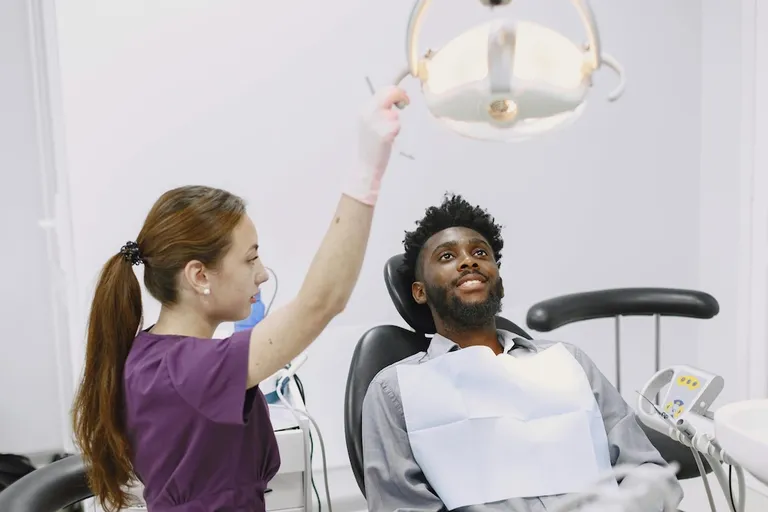
Travellers without an EHIC, or those needing non-emergency care, will use private clinics. A routine private dental consultation starts from around €50 (~$54), with fillings from €80–€150 (~$87–$163), extractions from €80–€200 (~$87–$218), and root canal treatment from €150–€400 (~$163–$435) depending on the clinic and city. [4][3]
Foreign prescriptions are not accepted directly at Spanish pharmacies (farmacias). Present your original prescription and dentist's letter to a Spanish doctor, who can issue a local prescription; a private consultation for this purpose typically costs €80–€150 (~$87–$163).[4][3]
Pain relievers such as Ibuprofen and paracetamol are available over the counter at pharmacies but cannot be purchased in supermarkets in Spain. Antibiotics – including amoxicillin, metronidazole, and clindamycin – require a prescription from a Spanish-licensed doctor, regardless of what was prescribed in your home country.[8]
On-call and night pharmacies
Most Spanish farmacias close by 8 pm on weekdays and by 1:30 pm on Saturdays. Farmacias de guardia (on-call pharmacies) provide 24-hour service for urgent medication needs. Search for the nearest one at farmaceuticos.com or look for the illuminated green cross outside. If you need antibiotics or stronger pain relief outside clinic hours, a hospital emergency department can issue a prescription.
Finding a dentist in Spain
All practising dentists in Spain must be registered with the Consejo General de Dentistas de España (the national regulatory body, known locally as 'el Consejo Dentista'), which maintains a searchable database of over 34,000 registered dentists and 25,000 dental clinics.
Major cities – Madrid, Barcelona, Valencia, Seville – have an abundance of private clinics, including specialist practices in oral surgery and maxillofacial care. Many clinics in tourist areas and cities with large expat populations offer consultations in English; ask specifically for an ' odontólogo que habla inglés' when booking. [9]
Appointments at private clinics are generally available within 24–48 hours. Verify your chosen dental clinic's registration before you visit them.[9]
Search for providers near your destination
Use Nomedic's provider search to find dental specialists in Spain. Save the address and phone number offline before you travel.
If you run out of medication or cannot access your dentist in Spain
Running out of antibiotics or pain relief mid-treatment is stressful, but Spain's pharmacy network and private clinic system are well set up to help. Over-the-counter (OTC) options (ibuprofen, paracetamol) can bridge the gap while you seek a prescription.
Managing heat, food, and dental flare-ups in Spain
Summer temperatures in southern Spain, the Canary Islands, and Mediterranean coastal areas regularly exceed 35°C, which increases inflammation and can intensify dental pain. Dehydration, common in the heat, also thickens saliva and can worsen dry socket or soft tissue irritation.

Drink at least 2 litres of water daily – bottled water is inexpensive and widely available. Spain's traditional siesta culture (midday rest from approximately 2 pm to 5 pm) means the hottest part of the day is culturally accepted downtime; use it to rest indoors and apply a cold compress to any swelling.
Spanish cuisine is rich in hard breads, jamón, and crunchy tapas — ask for softer options such as rice (arroz), gazpacho, or tortilla when chewing is uncomfortable. Clove oil (aceite de clavo) is available at Spanish farmacias and health food shops as a short-term topical analgesic while awaiting a dental appointment.
Increased pain is not always an emergency
Heat-related swelling and discomfort can mimic worsening infection but often resolve with hydration, cooling, and OTC pain relief. Signs that warrant urgent attention include rapidly spreading facial swelling, difficulty swallowing or opening your mouth, fever above 38.5°C, or severe headache. If any of these symptoms develop, follow the guidance in the Emergency tab.
Spanish phrases for clinicians
Show your Nomedic IPS first – it removes the need to explain your diagnosis verbally. If verbal communication is needed:
“Tengo un problema dental grave.”
I have a serious dental problem.
“Tengo una infección dental y necesito un antibiótico.”
I have a dental infection and I need an antibiotic.
“Necesito ver a un dentista urgentemente.”
I need to see a dentist urgently.
“Soy alérgico/a a la penicilina.”
I am allergic to penicillin.
“¿Dónde está la clínica dental más cercana?”
Where is the nearest dental clinic?
“Necesito una receta de emergencia para este medicamento.”
I need an emergency prescription for this medication.
Insurance considerations
What to know about travel insurance
Most travel insurance policies either exclude dental treatment entirely or cap it at a low amount insufficient for procedures such as root canal treatment (€150–€400) (~ $176-$470) or a crown (€300–€800) (~ $350-$940). Confirm explicitly that your policy covers emergency dental treatment before you travel, and check that the cover limit is adequate for the procedures you may need.
What to look for in a policy
Not just 'medical emergencies'. Dental treatment should be listed separately in the policy schedule with an adequate monetary limit.
Covers repatriation if care in Spain is insufficient for a severe dental or maxillofacial emergency.
Covers emergency replacement if antibiotics or pain relief are lost, damaged, or delayed in transit.
So someone can communicate with Spanish clinicians and locate an in-network provider on your behalf.
What to declare at application
Declare thoroughly. Incomplete disclosure can invalidate your entire policy, not just the dental-related claim.
State whether the issue is chronic, recurrent, or related to a prior procedure — insurers classify these differently.
Use the INN alongside the brand name.
State whether it required emergency intervention or antibiotics.
Declare conditions such as diabetes, bleeding disorders, or immunosuppression that affect dental treatment risk.
Your policy number and emergency assistance line, saved alongside your IPS and accessible offline.
The EHIC/GHIC entitles you to emergency stabilisation at a public Spanish hospital urgencias at no cost, but the European Commission confirms that dental treatment is generally not available under the Spanish state system for card holders except in very exceptional acute cases. This means the EHIC will not cover fillings, extractions, or follow-up dental treatment — only immediate pain management in a genuine emergency. Travel insurance with explicit dental cover remains essential.
Emergency protocol
Signs that require immediate care
Seek urgent care if you experience rapidly spreading facial or neck swelling, difficulty swallowing or breathing, inability to open your mouth, a fever above 38.5°C alongside facial swelling, or severe pain uncontrolled by OTC medication. These signs suggest a spreading dental infection that requires prompt antibiotic treatment or surgical drainage. Contact your travel insurer's 24-hour assistance line before attending hospital where possible – they can guide you to an in-network provider and manage direct billing.
When you arrive at urgencias – follow in order
Full clinical picture in seconds, including drug allergies and current medications — no verbal explanation needed.
Hand your phone to the triage nurse:
Tengo una emergencia dental. Tengo una infección que se está extendiendo.
I have a dental emergency. I have an infection that is spreading.
Especially penicillin allergy – say 'Soy alérgico/a a la penicilina' and show the allergy section of your Nomedic IPS.
Say 'Quiero asistencia sanitaria pública' to ensure EHIC/GHIC coverage applies and you are not moved to a private provider.
Calls and location
Call 112 (pan-European emergency number) for ambulance or police. For health emergencies, 061 connects directly to the emergency health coordination centre in most Spanish autonomous communities. If you're unsure of your exact address, open Google Maps and read the coordinates or street name to the operator.
In hospital
Dental anaesthetics (lidocaine, articaine) and antibiotics can interact with existing medications. Show your Nomedic IPS to the treating clinician before any injection or procedure to ensure your full medication history is known.
After any emergency
Before you leave the hospital if possible.
Required for insurer reimbursement and continuity of care at home.
Open Nomedic and tap Share to generate a QR code any clinician can scan.
Frequently asked questions
Are dental medications legal to bring into Spain?
Yes, for a personal supply carried in person. Spanish law prohibits the postal import of medications and packages are rejected by customs. If your dental pain management involves opioid analgesics or any other controlled substance, you must obtain a prior authorisation permit from AEMPS by emailing estupefacientes@aemps.es at least 10 days before travel.
Can I bring my dental issue medication into Spain?
Under Spanish Law 29/2006 you may carry up to 90 days of personal-use prescription medication, kept in original packaging with your prescription or a doctor's letter.[5]
Do not post medication to Spain
Spanish law prohibits the postal import of medications; they will be rejected by customs.
Are dental antibiotics and pain relief available in Spanish pharmacies?
Ibuprofen and paracetamol are available over the counter at pharmacies (farmacias). Antibiotics such as amoxicillin, metronidazole, and clindamycin require a prescription from a Spanish-licensed doctor – your foreign prescription will not be accepted directly, but a private clinic or hospital A&E (urgencias) can issue a local one.
What are the emergency numbers in Spain?
Ambulance / All emergencies
112 (pan-European)
Health emergency line
061 (most Spanish autonomous communities)
Police
091
How can I communicate my dental issue in an emergency in Spain?
Show your Nomedic IPS first. If verbal communication is needed:
“Tengo una infección dental grave.”
I have a serious dental infection.
“Soy alérgico/a a la penicilina.”
I am allergic to penicillin.
Does the EHIC cover dental treatment in Spain?
The European Commission states that dental treatment is generally not available under the Spanish state system for EHIC/GHIC holders, except in very exceptional acute primary care cases. Emergency stabilisation at a public hospital urgencias is accessible, but routine treatment, fillings, extractions, and follow-up work will be charged privately.[4]
Always request public healthcare explicitly
Say 'Quiero asistencia sanitaria pública' at the urgencias desk. If asked to pay upfront immediately, you are being directed to a private provider and your EHIC will not cover the cost.
Do I need special travel insurance to visit Spain with a dental issue?
Most standard travel policies either exclude dental treatment or cap it at a low amount. Given that a root canal in Spain costs €150–€400 (~$163–$435) and a crown €300–€800 (~$326–$869), inadequate dental cover can leave a significant gap. Look for a policy that explicitly names emergency dental treatment and has a monetary limit sufficient for the procedures you could need.
Declare thoroughly
State your dental condition type, current medications, date of last episode, and any associated conditions such as diabetes or bleeding disorders. Incomplete disclosure invalidates the entire policy.
Sources
- [1] Spanish Embassy Washington – FAQ: Medication Import and Postal Rules (Law 29/2006)
- [2] Expat Focus – Spain: Dentists and Dental Treatment
- [3] Expatica – Dentistry in Spain: Public and Private Dental Care
- [4] European Commission – Spain: European Health Insurance Card
- [5] Embassy of Spain in Washington — Bringing medication into Spain (Article 73, Law 29/2006)
- [6] US State Department – Spain Travel Advisory: Medication Rules
- [7] HealthPlan Spain – Antibiotics in Spain: Prescription Requirements
- [8] Caserxpat Insurance – How to Get a Prescription in Spain: Pharmacy Hours
- [9] Consejo General de Dentistas de España – Official Dentist Directory
More guides in Spain
- CityBarcelona Health Guide
- CitySeville Health Guide
- CityMadrid Health Guide
- CityValencia Health Guide
- ConditionTravelling to Spain with Diabetes: Medications, Healthcare and Emergency Protocols
- ConditionSleep Apnea in Spain: CPAP Travel, Medications and Healthcare
- ConditionTravelling to Spain with Hypertension: Medications, Healthcare, and Emergency Protocols
- ConditionCeliac Disease in Spain: Gluten Labelling, Medications and Healthcare
- ConditionEndometriosis in Spain: Hormonal Medications, SNS Access and Pain Management
- ConditionCrohn's Disease in Spain: Biologics, Heat and Flare Management
- ConditionUnplanned Pregnancy in Spain: Termination, Prenatal Care and Legal Rights
- ConditionSevere Allergies in Spain: Epinephrine Import Rules, Auto-Injectors and Anaphylaxis Protocols
- ConditionMigraine in Spain: Triptans, CGRP Drugs and Summer Heat
- ConditionInsomnia in Spain: Sleep Medications, Siesta Culture and Pharmacy Access
- ConditionParkinson's Disease in Spain: Levodopa, Heat and the SNS
- ConditionThyroid Disorder in Spain: Levothyroxine, Heat and SNS Access
- ConditionObesity in Spain: Heat, Mobility and Weight-Inclusive Healthcare
- ConditionPCOS in Spain: Medications, Heat Risk and Specialist Access
- ConditionTravelling to Spain with Asthma: Medications, Healthcare and Emergency Protocols
- ConditionTravelling to Spain with ADHD: Medications, Customs Rules and Healthcare
- MedicationInsulin in Spain: EHIC Access, Brands and Cold-Chain Plan
- MedicationADHD Medication in Spain: Permits, Brands and Pharmacies
- MedicationVyvanse in Spain: Not Approved, Elvanse, and Prescribing
- MedicationSemaglutide in Spain: Ozempic Shortage, Brands, Prescribing
- MedicationMetformin in Spain: Dianben, Generics and Pharmacy Access
- MedicationAdderall in Spain: Not Approved, Import Rules and Alternatives
- MedicationAmlodipine in Spain: Norvasc, Prescription Rules and Pharmacies
- MedicationConcerta in Spain: Supply Shortage, ER Formulation and Prescribers
- MedicationGLP-1 Medication in Spain: Brands, Supply and Prescribing
- MedicationMelatonin in Spain: Circadin, Slenyto and Pharmacy Access
- MedicationMethylphenidate in Spain: AEMPS Permit, Brands and Pharmacies
- MedicationOzempic in Spain: Supply, SNS Cover and Prescribing
- MedicationRitalin in Spain: No Brand, IR Alternatives and Prescribers
- MedicationSumatriptan in Spain: Imigran, Prescriptions and Pharmacy Access