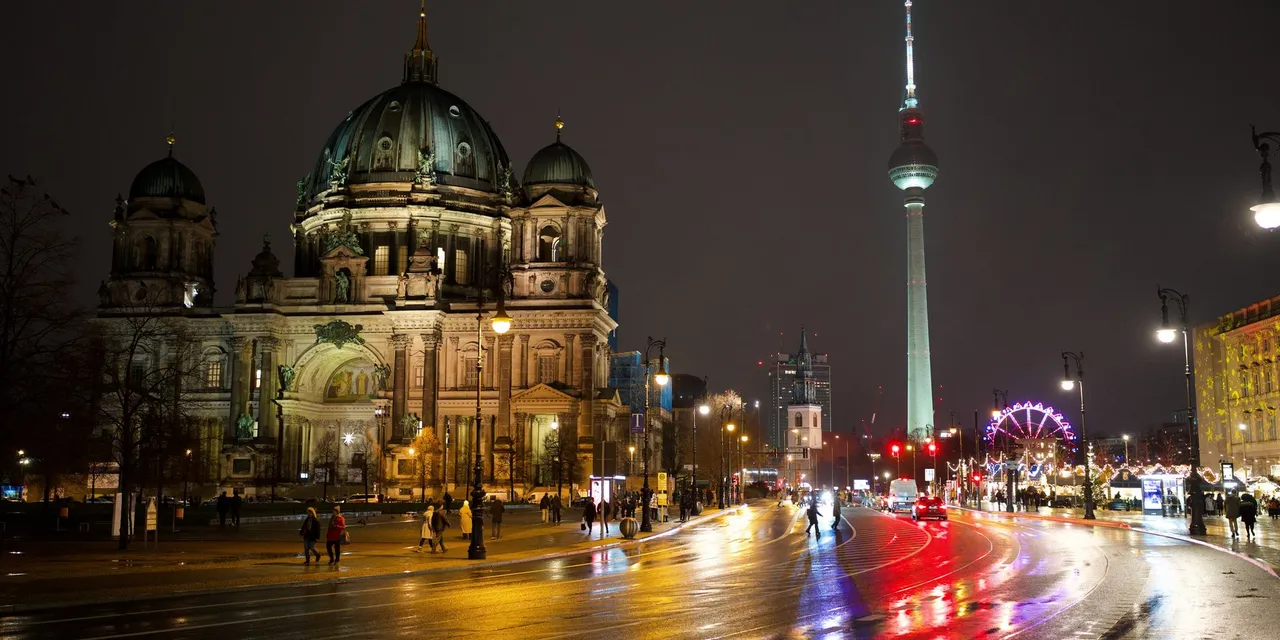
Healthcare in Berlin
Berlin's healthcare system is anchored by the renowned Charité university hospital and the city-owned Vivantes network. Travellers without German public insurance are generally treated as private patients and pay upfront, while EHIC/GHIC holders can access public hospitals at resident rates.
Berlin healthcare: what travellers actually need to know
Berlin runs on a two-tier system: statutory public care (GKV) for residents and the Charité, one of Europe's largest university hospitals, anchors the public network alongside the Vivantes group's nine city-owned facilities. Travellers without German statutory insurance access care as private patients, paying upfront and reclaiming costs later. EU and EEA citizens holding a valid EHIC / GHIC can use GKV-contracted public hospitals at reduced cost, but not private clinics or repatriation.[1]
The city has more than 90 hospitals and around 9,200 doctors in general or specialist practices. Private chains including Helios and Asklepios operate multiple Berlin sites and are accustomed to international patients. English is spoken at most major hospitals, but smaller neighbourhood practices may not have English-speaking staff on every shift.[2]
One feature that catches many arrivals off guard: Berlin has no corporate pharmacy chains. Every Apotheke is independently owned, and all medicines (even paracetamol) must be bought there, not at a supermarket or Drogerie (drugstore). This changes how you stock up on basics.
Finding a doctor or hospital in Berlin
For non-emergency GP care, search Jameda.de or Doctolib and filter for English-speaking doctors (Englisch sprechend). Typical practice hours are 08:00 to 17:00, Monday to Friday, with an hour's break for lunch; Wednesday afternoons are often closed. Book by phone or via the practice's online system.[3]
Outside regular hours, call 116 117, the national on-call medical service (Bereitschaftsdienst). This service operates on evenings, weekends, and public holidays for conditions that are urgent but not life-threatening. Dispatchers can direct you to the nearest duty clinic or send a doctor.[3]
For emergencies, call 112 (Europe-wide number). Ambulances are dispatched by the Berliner Feuerwehr and will take you to the nearest appropriate hospital. You cannot pre-select a hospital in an emergency.
Key Berlin hospitals for international patientsCharité – Universitätsmedizin Berlin operates four campuses across the city. It has a dedicated International Office and can assist non-German-speaking patients with all aspects of their care. Campus Mitte (Charitéplatz 1) and Campus Benjamin Franklin (Hindenburgdamm 30) both have 24-hour emergency departments.[4]
Vivantes Klinikum runs nine facilities including Klinikum Neukölln and Auguste-Viktoria-Klinikum in Schöneberg. These are Berlin's municipal hospitals and accept EHIC patients at GKV rates.
Helios Klinikum Berlin-Buch is a private-chain hospital in the northeast with over 60 specialist departments. It functions as an academic hospital of the Charité complex. English-speaking doctors are available; confirm when booking.
MEOCLINIC (Friedrichstrasse 71, Berlin Mitte) is a private outpatient and inpatient clinic that specialises in English-speaking international patients. It is not an emergency facility, but suits planned consultations and specialist referrals.
Booking a GP appointment in Berlin1. Online. Use Doctolib (doctolib.de) or Jameda to filter for English-speaking doctors (Hausarzt) and book directly. This is faster than calling and confirms language ability upfront.
What healthcare costs in Berlin
Without insurance, GP consultations typically cost €40–70 (~$43–75), depending on what the consultation involves. Fees are set using the Gebührenordnung für Ärzte (GOÄ), Germany's medical fee schedule, but private doctors may apply a higher multiplier.[5]
Specialist consultations run €80–150+ (~$91–171+) for a standard visit. German hospitals publish no flat self-pay emergency tariff: an uninsured emergency visit is billed itemised under the GOÄ. Inpatient care is billed as a flat rate for the whole case rather than per night, so a single admission can run to several thousand euros regardless of how long you stay.
Insurance rules for Berlin
EU and EEA citizens with a valid EHIC access treatment at GKV-contracted public hospitals at the same rate as German residents. The EHIC does not cover private clinics, repatriation, or non-urgent care.[7]
Schengen visa applicants must carry travel insurance with a minimum of €30,000 (~$32,400) in medical and repatriation coverage. The policy must be valid across all Schengen countries for the full trip duration. This is a visa condition, not a recommendation.[7]
Non-EU travellers who do not need a visa face no legal insurance requirement, but a single uninsured hospital stay can create a direct bill of thousands of euros. Comprehensive travel insurance with direct-billing capability is the practical standard.
Payment at clinics and hospitals
Private patients typically pay upfront at GP practices and receive a detailed invoice (Rechnung) for insurance reimbursement. Hospitals may request a deposit from uninsured international patients before non-emergency admission. Card payment (EC-Karte, Visa, Mastercard) is accepted at major hospitals; smaller practices may be cash-only.
| GP visit (private) | $29–80 GOÄ 2.3x standard |
| Specialist consultation | $91–171 Standard visit; varies |
| ER assessment | Itemised, no flat fee Deposit likely; GOÄ-billed |
| Blood panel (direct lab) | $71 Walk-in, no referral |
| X-ray (chest) | $19–47 GOÄ 5135, one plane |
| MRI (one region) | $296–536 Contrast extra |
| Dental check-up | $6–15 GOZ 0010; X-rays extra |
| Dental cleaning (PZR) | $91–148 Per Verbraucherzentrale Berlin |
| Dental crown | $798–1,140 All-ceramic; lab fees vary |
| Telemedicine consult | $44 TeleClinic flat fee |
| Hospital admission (per case) | ~$5,200 DRG flat rate, not nightly |
German hospitals bill a DRG flat rate per case rather than per night, and publish no flat self-pay emergency tariff, so an uninsured ER visit is billed itemised under the GOÄ.
Pharmacies in Berlin: the Apotheke system explained
Every medicine sold in Germany (including paracetamol and ibuprofen) must be purchased from a licensed Apotheke (pharmacy), identified by a large red "A" sign. Drugstore chains such as DM and Rossmann sell supplements and cosmetics but are legally prohibited from stocking any medication. This surprises most arrivals.[8]
Standard Apotheke hours are Monday to Friday 8 am to 6 pm, with shorter Saturday hours. For evenings, Sundays, and public holidays, a rotating Notdienst (emergency duty) system ensures at least one pharmacy is always open in every district. The nearest closed Apotheke posts the address of the on-duty pharmacy in its window. You can also text your postcode to 22833 (chargeable) to find the nearest open one.[9]
Two pharmacies with extended hours useful for visitors: the Apotheke at Berlin Hauptbahnhof (Central Station, Europaplatz 1) opens 7 am to 9 pm daily; the Medios Apotheke at Oranienburger Tor (Friedrichstrasse 113a, Berlin Mitte) is open 365 days a year. City-centre Apotheken typically have English-speaking staff.
Foreign prescriptions and OTC rules
Foreign prescriptions from outside the EU are generally not accepted at German pharmacies. If you need a prescription medication refilled, you will need a German doctor to issue a new Rezept. EU prescriptions may be accepted at the pharmacist's discretion for non-controlled medicines, but this is not guaranteed.[8]
Since January 2024, German doctors issue electronic prescriptions (e-Rezept) as standard. The QR code can be presented at any Apotheke in Berlin. OTC prices are not regulated, so they vary between pharmacies; the comparison platform medizinfuchs.de lists current prices if cost matters.
Practical tips for getting care in Berlin
The two-tier billing trap. Many Berlin doctors hold both a statutory (Kassenarzt) and a private (Privatarzt) practice, sometimes at the same address. Confirm before your visit which status applies to you. Walking into a Kassenarzt as an uninsured traveller can result in unexpected billing at private rates.
The Notaufnahme is not a walk-in clinic. German emergency departments (Notaufnahme) are for genuine emergencies. Using one for a non-critical complaint is expensive and results in long waits, as triage will de-prioritise you. For urgent but non-emergency issues, 116 117 or a Notdienst clinic is faster and cheaper.
Carry your medication details in German. German pharmacists use INN (International Nonproprietary Name) generic names, and brand names differ from those in other countries. Bring your medication's active ingredient name, not just the brand. Nomedic's IPS exports include your medication list in a format readable by German clinicians.
Book specialists via Doctolib, not by walking in. German specialists (Fachärzte) do not accept walk-ins except in urgent situations. Booking via Doctolib confirms English availability in advance and shows you the waiting time. Without a referral from a GP, you pay as a private patient regardless of insurance status.
Cycling injuries: Berlin's primary risk. Berlin has over 1,000 km of cycle lanes, and cycling is a primary mode of transport for locals and visitors alike. Road-surface inconsistencies, tram tracks, and heavy e-scooter traffic make falls common. The Unfallkrankenhaus Berlin (ukb) in Marzahn-Hellersdorf is the city's specialist trauma hospital and handles cycling and e-scooter injuries. Its 24-hour emergency number is +49 30 5681-0.
Useful links
- Charité International Office, patient services for non-German speakers
- Berlin.de, emergency pharmacies and hospital directory
- ABDA, official German pharmacy locator (Apotheken.de)
- Germany Federal Foreign Office, Schengen visa insurance requirements
- 116 117, Kassenärztliche Bundesvereinigung on-call service
Frequently asked questions
Can I use my EHIC card at private clinics in Berlin?
No. The EHIC covers treatment at GKV-contracted public hospitals only, such as Charité and Vivantes facilities. Private clinics and Privatarzt practices bill you in full, regardless of your EHIC. Supplementary travel insurance is needed to cover these costs.
Do I need a German prescription to fill my medication at a Berlin Apotheke?
For most prescription-only medications, yes. Foreign prescriptions issued outside the EU are generally not accepted by German pharmacies. You will need a German doctor to issue a local Rezept. Bring your medication's generic (INN) name and dose to make the consultation faster.
What is the minimum insurance coverage required for a Schengen visa to Germany?
Schengen visa applicants must hold travel insurance with a minimum of €30,000 (~$32,400) in medical and repatriation coverage, valid for all Schengen countries and the full trip duration. The policy must state the insurer name, policy number, coverage dates, and coverage amount clearly.
Where can I find an English-speaking doctor in Berlin?
Use Doctolib (doctolib.de) or Jameda and filter for 'Englisch sprechend' (English-speaking). The Charité and MEOCLINIC (Friedrichstrasse 71) both have English-speaking specialists. For out-of-hours urgent advice, call 116 117; for emergencies, call 112.
How do I find an emergency pharmacy in Berlin on a Sunday?
Check the door of any closed Apotheke, German law requires it to post the nearest on-duty pharmacy's address. You can also text your postcode to 22833 or visit the ABDA locator at apotheken.de. The Apotheke at Berlin Hauptbahnhof is open daily 7 am to 9 pm.
Can a GP in Berlin refill a chronic medication prescription without seeing a specialist?
Yes, for most chronic medications a Hausarzt (GP) can issue a German prescription after reviewing your records. Germany's 2024 e-prescription system means the Rezept is issued digitally and usable at any Apotheke in the city. Bring documentation of your current medication, dose, and prescribing diagnosis.
Sources
- [1] Berlin Health Excellence — Hospitals and Clinics in Berlin
- [2] Berlin Health Excellence — Medical facilities network statistics
- [3] Expatica — Guide to German doctors and GPs
- [4] Delta Made Care — Top Hospitals in Berlin for International Patients
- [5] Expatica — GP and specialist consultation costs in Germany without insurance
- [6] Stay Smart Guide — Tourist health insurance Germany: costs and coverage
- [7] Germany.info Federal Foreign Office — Medical health insurance for Schengen visa
- [8] LiveInGermany — German Pharmacy Guide 2026: Apotheke rules and foreign prescriptions
- [9] gesund.bund.de — Pharmacies in Germany: opening hours and on-duty system
- [10] §5 GOÄ — official statute: point value and multiplier caps
- [11] Labor Berlin (Charité Vivantes) — Basis-Check self-pay price list
- [12] IMD Berlin — laboratory price list at 1.0x GOÄ (Stand 01.09.2025)
- [13] MRT Berlin Charlottenburg — published MRI self-pay prices
- [14] Privat-MRT Berlin — published MRI self-pay prices
- [15] Verbraucherzentrale Berlin — what a professional dental cleaning costs
- [16] AllDent Zahnzentrum Berlin — published dental price list
- [17] TeleClinic — published telemedicine price model
- [18] Bundesbasisfallwert 2026 — national DRG base rate for inpatient care
More cities in Germany
Health guides for Germany
- ConditionDiabetes in Germany: Insulin Import Rules, Cold Chain and Pharmacy Access
- ConditionTravelling to Germany with ADHD: Medications, Customs Rules and Healthcare
- ConditionRheumatoid Arthritis in Germany: Biologics, Cold Chain and Apotheke Access
- ConditionAsthma in Germany: Pollen Season, Inhalers and Pharmacy Access
- MedicationAdderall in Germany: Import Rules, Risk and Alternatives
- MedicationMedikinet in Germany: BtMG Status, Supply and Prescribers
- MedicationMelatonin in Germany: Circadin, Slenyto and Prescription Rules
- MedicationMethylphenidate in Germany: BtMG Controls, Brands and Permits
- MedicationRitalin in Germany: BtMG Controls, IR Formulation and Prescribers
- MedicationVyvanse in Germany: BtMG Status, Elvanse, and Prescribing