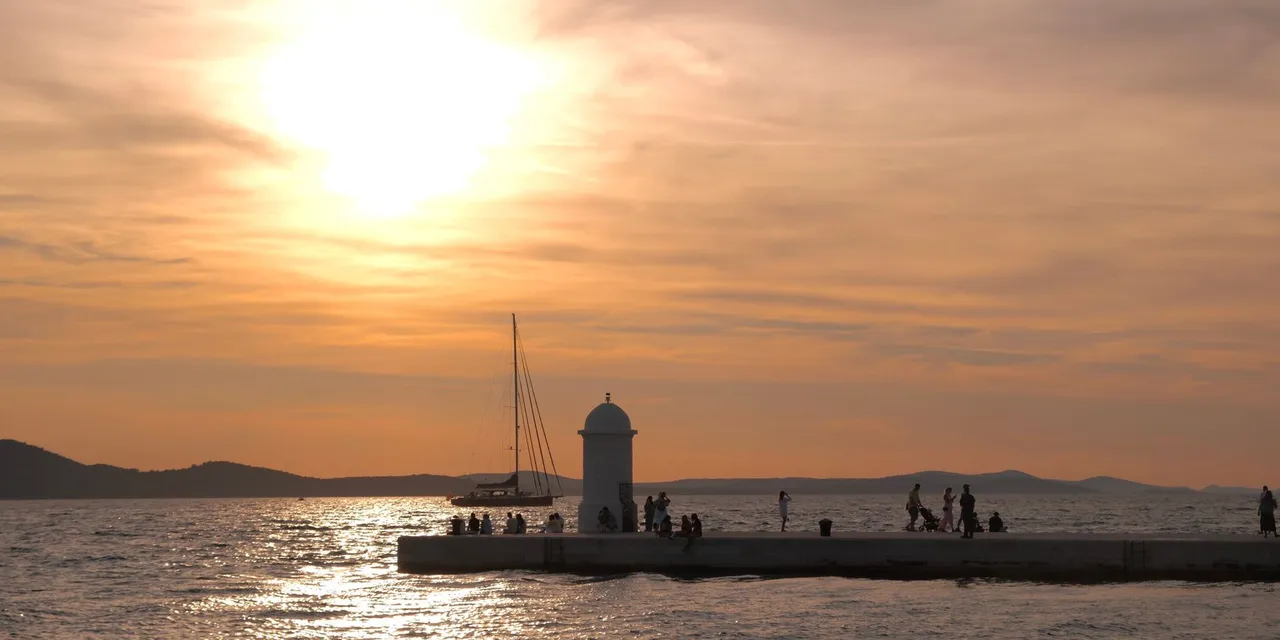
Asthma in Croatia: Inhaler Import Rules, Bura Wind and Pharmacy Access
Croatia's Bura wind, summer pollen, and Adriatic coast humidity create specific triggers. Know inhaler import rules and pharmacy access before you fly.
Asthma in Croatia: what changes when you travel
Croatia's Adriatic coast brings strong seasonal winds, including the Bura (a cold, dry north-easterly that can irritate airways) alongside high summer ozone levels and pollen from olive trees, grasses, and cypress. Zagreb's air quality sits at a moderate AQI of 58 with PM2.5 as the dominant pollutant, which matters most during physical activity. Standard rescue and preventer inhalers are available in Croatian pharmacies, though exact brand names differ from those in other markets.
This guide covers medication import rules, local brand names, EHIC access via Croatia's national health system (HZZO), prescription rules for foreign travellers, emergency communication in Croatian, and how to use your International Patient Summary (IPS) to get fast care.
Medical disclaimer: This guide is for informational purposes only and does not constitute medical advice. Always consult your specialist before travelling, particularly regarding changes to your treatment schedule, vaccination requirements, and travel insurance.
Key risks for asthma travellers in Croatia
Bura and Jugo winds
The Bura (cold, dry north-easterly) and Jugo (warm, humid south-easterly) are coastal winds that shift temperature and humidity rapidly along the Dalmatian coast. Check daily wind forecasts on the Croatian Meteorological and Hydrological Service (DHMZ) and carry your reliever at all times on wind-heavy days.
Summer heat and ozone
Coastal temperatures regularly exceed 30°C in July and August, and ground-level ozone peaks on hot, still afternoons. Limit outdoor activity between 11 am and 5 pm during peak summer heat and check the European Environment Agency's ozone bulletin before planning strenuous excursions.
Pollen season
Grass pollen peaks in May and June in inland Croatia; olive and cypress pollen are significant along the Dalmatian coast from April through June. The HZZO pollen monitoring network publishes daily counts. Check these before outdoor activities and increase preventer use if counts are high, as instructed by your specialist.
Wildfire smoke
The Dalmatian coast experiences wildfires between July and September, generating PM2.5 smoke that can be carried inland by coastal winds. Monitor the Croatian Civil Protection Authority (DUZS) fire alerts and stay indoors with windows closed if smoke is visible or AQI rises above 100.
Pharmacy supply gaps on islands
Pharmacies (ljekarnice) on smaller Adriatic islands such as Vis, Lastovo, and Mljet have limited stock and reduced hours outside the peak summer season. Carry at least twice your expected supply if travelling to smaller islands, as the next stocked pharmacy may require a ferry journey.
Preparation checklist
- Book a pre-travel respiratory review — Ask your specialist to review your action plan and confirm your current preventer and reliever regimen is optimised before departure.
- Obtain a specialist letter in English and Croatian — The letter should state your diagnosis, current medications by INN and brand name, and confirm medical necessity for all devices.
- Pack at least twice your expected supply of inhalers — Smaller Adriatic islands have limited pharmacy stock; a double supply covers delays and inhaler damage.
- Store your IPS on Nomedic before you fly — Your IPS carries your diagnosis, medications, allergies, and emergency contacts in a format any Croatian clinician can read offline.
- Check your EHIC or GHIC validity — EU/EEA travellers should confirm their card has not expired; it covers HZZO public hospitals but not private clinics or repatriation.
- Download the DHMZ weather app — Croatia's Meteorological and Hydrological Service publishes wind and pollen forecasts; check daily during the Bura and Jugo seasons.
- Identify the nearest ljekarnica (pharmacy) at each destination — Including after-hours duty pharmacy (dežurna ljekarna) contact details, especially on islands.
- Carry inhalers and devices in hand luggage only — IATA rules permit all inhalers in cabin baggage; do not pack them in checked luggage where temperature and pressure vary.
- Save Croatian emergency numbers offline — Ambulance 194, police 192, pan-European 112; save these in your Nomedic profile.
- Find a pulmonologist near your destination — Use Nomedic's provider search to locate a pulmolog before you travel and save the clinic address and phone number offline.
Documents to carry when travelling to Croatia with asthma
Croatian clinicians and pharmacists work from paper prescriptions and printed specialist letters. The Nomedic app consolidates your key documents into a single offline-accessible record.
Your International Patient Summary (IPS)
Your IPS contains your asthma diagnosis, current medications (INN and brand), known allergens, and emergency contacts in a structured format readable by any clinician worldwide without a language barrier. In Croatia, where emergency triage staff may have limited English outside Zagreb and Split, an IPS shared via QR code can speed up assessment significantly.
Full document checklist
Keep the following accessible on your phone and ready to share. Your Nomedic IPS covers items 1 and 6 automatically.
- ·Your Nomedic IPS Covers your asthma diagnosis, medications, allergies, and functional status. Offline and QR-shareable.
- ·Specialist letter (pismo specijalista) Must state your diagnosis, all medications by INN and brand name, and confirm medical necessity for inhalers and any spacer devices.
- ·Prescriptions with INN names Croatian pharmacists require a local (Croatian) prescription to dispense; your home prescription supports a private consultation and helps a local doctor issue one quickly.
- ·EHIC or GHIC card (if applicable) EU/EEA travellers should carry a valid EHIC for access to HZZO-contracted public hospitals.
- ·Travel insurance schedule Policy number and insurer's 24-hour line saved in your Nomedic profile.
- ·Croatian emergency numbers Ambulance 194, police 192, fire 193, pan-European 112. Saved offline in Nomedic.
Bringing your asthma medications to Croatia
Croatia applies EU rules on personal medication imports: travellers may bring a supply proportionate to the length of their stay, up to a maximum of 90 days for prescription medicines, provided the medication is carried in its original packaging with the original label. A specialist letter confirming medical necessity and a copy of your prescription are recommended for all inhalers, particularly combination devices and biologics. Croatia's national medicines regulator, the Agency for Medicinal Products and Medical Devices (HALMED), oversees import compliance and can be contacted if border queries arise[1].
Do not post your medication to Croatia.
Postal import of prescription medicines is prohibited under Croatian customs law. Always carry all inhalers and preventer medications in person in your hand luggage.
Asthma medications: brand names, INNs, and Croatia availability
Croatian pharmacies stock most common inhaled corticosteroids, beta-2 agonists, and leukotriene receptor antagonists, though the brand names you are familiar with may not be available; the table below shows the INNs alongside brands registered and distributed in Croatia[2].
Store between 15°C and 30°C; avoid freezing or leaving in a hot car.
Pressurised inhaler: store below 30°C away from direct sunlight.
Combination LABA/ICS; available in Accuhaler and Evohaler devices.
Store below 30°C; protect from moisture and light.
MART regimen devices available in Croatia; confirm device type with local pharmacist.
Montelukast and neuropsychiatric effects: inform your travel companion
The EMA updated the montelukast SmPC in 2020 to strengthen warnings about neuropsychiatric reactions including agitation, aggression, and sleep disturbances. If you take montelukast, ensure your travel companion is aware of these potential effects. If new or worsening symptoms appear during your trip, seek medical review promptly.
Travelling with biologic therapies
If your treatment includes a biologic such as dupilumab, mepolizumab, or benralizumab, these steps apply regardless of your destination within Croatia.
Your medication list, ready to share.
Nomedic stores your medication name, INN, dosage, and frequency so any clinician worldwide can read it.
Healthcare and prescriptions in Croatia
Croatia's public health system is administered by the Croatian Health Insurance Fund (HZZO). EU/EEA travellers holding a valid EHIC or GHIC can access medically necessary care at HZZO-contracted public hospitals at the same cost as Croatian nationals, typically a co-payment of €1.33 to €13.27 (~$1.57 to ~$15.61) per visit depending on the service type. Travellers without reciprocal coverage must use private clinics, where a respiratory specialist consultation (pulmolog) costs approximately €60 to €120 (~$71 to ~$141).HZZO co-payment schedule.[5]
Foreign prescriptions are not directly dispensed at Croatian pharmacies (ljekarnice). A private consultation with a local doctor or pulmonologist is required to obtain a Croatian prescription, which the pharmacist then processes. Standard inhalers such as salbutamol and budesonide are stocked in most urban pharmacies. After-hours access is via the dežurna ljekarna (duty pharmacy) system; each town displays the duty rota in pharmacy windows or via the HZZO website[6].
Reliever inhalers are dispensed at retail pharmacies
Salbutamol and terbutaline are prescription-only in Croatia and a foreign prescription is not dispensed on its own, but a ljekarna can make a one-off supply at the pharmacist's discretion, recording your passport details. Carry your IPS and specialist letter to a ljekarnica and ask the pharmacist directly.
Finding an asthma specialist
Respiratory specialists (pulmolozi) work in the pulmonology departments (odjel za pulmologiju) of public hospitals and in private polyclinics. In Zagreb, the University Hospital Centre Zagreb (KBC Zagreb) and KBC Rebro both have respiratory departments. In Split, KBC Split provides respiratory medicine services. Walk-in access is not standard at specialist level; a referral from a general practitioner (liječnik opće medicine) or a private out-of-pocket appointment is the route for non-emergency specialist contact. Use Nomedic's provider search to locate a pulmonologist near your destination before you travel.
Search for providers near your destination
Use Nomedic's provider search to find asthma specialists in Croatia. Save the address and phone number offline before you travel.
If your inhaler runs out or is damaged in Croatia
A lost or damaged reliever inhaler does not automatically require a hospital visit. Most urban pharmacies in Croatia can supply a replacement salbutamol inhaler at the pharmacist's discretion in a documented emergency, with your passport details recorded, pending a local prescription.
Managing environmental triggers day to day in Croatia
Coastal Croatia reaches peak temperatures of 33°C to 37°C in July and August, with the Bura wind generating sudden dry air episodes that can irritate the airways within minutes. The Zagreb AQI of 58 with PM2.5 as the dominant pollutant reflects moderate year-round urban pollution that spikes further during wildfire events[7].
Use the DHMZ weather portal (meteo.hr) to check pollen counts and wind forecasts each morning. Plan outdoor activity before 10 am or after 7 pm on high-pollen or high-ozone days. Air-conditioned spaces (shopping centres, museums, and hotel lobbies) provide effective refuge during afternoon heat peaks. On days when Bura is forecast above Beaufort 6, consider staying in sheltered bays or inland rather than exposed coastal headlands. If staying in accommodation without air conditioning, request a fan and keep windows closed during peak heat hours.
Bura-triggered symptoms are not always an acute attack
Sudden onset of coughing or mild wheeze in strong Bura conditions can reflect airway irritation rather than a progressive attack. Use your reliever as prescribed and move to a sheltered, indoor space. If symptoms do not improve within 15 to 20 minutes of reliever use or worsen progressively, follow the guidance in the Emergency tab.
Croatian phrases for clinicians
Show your Nomedic IPS first. It removes the need to explain your diagnosis verbally. If verbal communication is needed:
“Imam astmu.”
I have asthma.
“Imam napadaj astme.”
I am having an asthma attack.
“Trebam pulmologa.”
I need a pulmonologist.
“Uzimam salbutamol i budezonid za astmu.”
I take salbutamol and budesonide for asthma.
“Gdje je najbliža ljekarna?”
Where is the nearest pharmacy?
“Trebam hitnu zamjenu inhalatora.”
I need an emergency replacement inhaler.
Insurance considerations
What to know about travel insurance
Policies that cover 'pre-existing conditions' in generic terms do not always extend to asthma-related hospitalisations or emergency medication replacement in Croatia. Emergency inpatient care at a private hospital in Zagreb can cost €400 to €900 (~$470 to ~$1,060) per night without cover.
What to look for in a policy
Not just 'pre-existing conditions covered'. Your condition should be named on the schedule.
Covers repatriation to your home country if local care is insufficient.
Covers emergency replacement if your inhaler or preventer is lost, damaged, or delayed.
So someone can communicate with Croatian clinicians on your behalf.
What to declare at application
Declare thoroughly. Incomplete disclosure can invalidate your entire policy, not just the asthma-related claim.
Intermittent, mild persistent, moderate persistent, or severe persistent. Insurers use these to price risk.
Use the INN alongside the brand name.
Whether it required emergency attendance or hospitalisation in the past 24 months.
Allergic rhinitis, eczema, GERD, obstructive sleep apnoea, and nasal polyps are common comorbidities that must be declared separately.
Your policy number and emergency assistance line, saved alongside your IPS and accessible offline.
EU/EEA travellers with a valid EHIC can access Croatia's state health system (HZZO) on the same terms as Croatian nationals, covering medically necessary treatment at contracted public hospitals. The EHIC does not cover private clinics, repatriation, or medication replacement costs. Comprehensive travel insurance remains essential alongside your EHIC.
Emergency protocol
Recognising a serious attack and when to go to A&E
Use your reliever as prescribed. If symptoms do not improve within 15 to 20 minutes, if you are unable to speak in full sentences, or if your lips or fingertips appear blue, this is a medical emergency. Call 194 (ambulance) or 112 (pan-European) immediately and contact your travel insurer's 24-hour line.
When you arrive at the hitna pomoć (emergency department): follow in order
Full clinical picture in seconds: diagnosis, medications, allergies, and emergency contacts without verbal explanation.
Hand your phone to the triage nurse:
Imam teški napadaj astme. Trebam hitnu pomoć.
I am having a severe asthma attack. I need emergency help.
This confirms your current regimen and avoids delays in matching you to an appropriate bronchodilator or systemic corticosteroid.
Use the INN (salbutamol, terbutaline, formoterol) rather than the brand name to prevent formulary confusion.
Calls and location
Call 194 for an ambulance or 112 (pan-European). In coastal areas, state the nearest town or ferry port and the island name if you are on an island; Croatian emergency dispatch can coordinate sea or air transfer. Police: 192. Fire: 193.
In hospital
If you are on regular oral or high-dose inhaled corticosteroids, inform the treating clinician before any anaesthesia or surgical procedure. Adrenal suppression risk requires specific perioperative management.
After any emergency
Before you leave the hospital if possible.
Required for insurer reimbursement and continuity of care with your home specialist.
Open Nomedic and tap Share to generate a QR code any clinician can scan.
Frequently asked questions
Is asthma medication legal in Croatia?
Yes, asthma medication is legal to bring into Croatia, provided it is carried in its original packaging with the original label and the supply is proportionate to the length of stay, up to a maximum of 90 days for prescription medicines. A specialist letter confirming medical necessity and a copy of your prescription are strongly recommended, particularly for combination inhalers and biologic therapies.
Can I bring my asthma medication into Croatia?
EU rules permit travellers to bring up to a 90-day personal supply of prescription medicines into Croatia in original packaging with the original label; a specialist letter confirming medical necessity is strongly recommended for all inhalers.
Do not post medication to Croatia
Postal import of prescription medicines is prohibited under Croatian customs regulations. Carry all medication in person in hand luggage.
Are asthma medications available in Croatian pharmacies?
Standard rescue inhalers (salbutamol/Ventolin) and preventer inhalers (budesonide/Pulmicort, fluticasone/Flixotide) are stocked in most urban Croatian pharmacies. On smaller Adriatic islands, stock is limited; carry a double supply and identify the nearest dom zdravlja (health centre) on your island before you arrive.
What are the emergency numbers in Croatia?
Ambulance
194
Police
192
Fire
193
Pan-European
112
How can I communicate my asthma diagnosis in an emergency in Croatia?
Show your Nomedic IPS first. If verbal communication is needed:
“Imam astmu.”
I have asthma.
“Uzimam salbutamol za astmu.”
I take salbutamol for asthma.
How do the Bura and Jugo winds affect asthma on the Adriatic coast?
The Bura brings sudden cold, dry air that can provoke airway irritation within minutes; the Jugo brings warm, humid air with elevated pollen load. Both can trigger symptoms with little warning on the Dalmatian coast. Check the DHMZ daily wind forecast and carry your reliever at all times on forecast wind days.
Use meteo.hr
The Croatian Meteorological and Hydrological Service publishes free daily wind, pollen, and air quality data. Bookmark the site before your trip and check it each morning during the coastal season.
Do I need special travel insurance to visit Croatia with asthma?
Standard policies frequently exclude asthma unless it is explicitly declared and named on the schedule. Private emergency hospitalisation in Croatia costs approximately €400 to €900 (~$470 to ~$1,060) per night; a policy without asthma cover leaves you exposed to the full cost of any respiratory emergency.
Declare thoroughly
Subtype, current medication, last acute episode, associated conditions. Incomplete disclosure invalidates the entire policy, not just the asthma-related claim.
Sources
- [1] HALMED — Agency for Medicinal Products and Medical Devices of Croatia: Import of Medicinal Products
- [2] HALMED — Medicinal Products Database (authorised products in Croatia)
- [3] IATA — Medical Conditions and Air Travel
- [4] EMA — Dupixent (dupilumab) Summary of Product Characteristics
- [5] HZZO — Croatian Health Insurance Fund: Rights of Insured Persons
- [6] European Commission — Directive 2011/24/EU on the Application of Patients' Rights in Cross-Border Healthcare
- [7] Croatian Meteorological and Hydrological Service (DHMZ) — Climate Data for Croatia