EHIC vs GHIC: What Actually Changed and What It Means for Your Next Trip
The Global Health Insurance Card (GHIC) replaced the European Health Insurance Card (EHIC) for most UK residents after Brexit, but the two cards are not identical. Here's exactly what changed, what stayed the same, and what neither card covers.
What's the difference between EHIC and GHIC?
If your EHIC is gathering dust in a drawer somewhere, you're definitely not alone. According to the NHS Business Services Authority, around 1.8 million EHICs held by UK residents were due to expire in 2025. Most of those people need to switch to the GHIC, but the two cards are not identical, and the gaps between them matter in specific situations.
Medical disclaimer: This article provides general information about healthcare access cards and does not constitute medical or legal advice. Entitlement rules can change. Always verify your eligibility and current coverage countries with the NHS Business Services Authority before travel. Carry comprehensive travel insurance alongside any health card.
Origins of the EHIC and GHIC
The EHIC was introduced by the European Commission in 2003[7]. It gave residents of EU and EEA member states the right to access state-provided healthcare in other member countries on the same terms as locals. Before January 2021, UK residents were entitled to one like any other EU citizen[1].
When the UK left the EU, that entitlement lapsed. Under the EU-UK Trade and Cooperation Agreement concluded in December 2020, the two sides agreed that reciprocal healthcare provision would continue, but the UK needed its own card to prove eligibility. The result was the GHIC, issued by the NHS Business Services Authority on behalf of the Department of Health and Social Care[3].
The GHIC is valid for five years and is free to apply for through the official NHS website[1]. Any unofficial websites that charge a fee for the application should be avoided.
What stays the same?
For the vast majority of travellers, the practical day-to-day experience is identical. Both the EHIC and GHIC give you access to medically necessary, state-provided healthcare in participating countries on the same basis as a local resident. That means treatment should be free where it's free for locals, or subject to the standard co-payment where locals pay one[2].
Both cards cover medically necessary treatment that cannot reasonably wait until you return home. This includes emergency care, treatment for pre-existing conditions, and routine maternity care (provided you haven't travelled specifically to give birth). The decision on whether care is considered medically necessary is made by the healthcare provider in the country where you receive treatment[2].
Neither card covers private healthcare. If you're taken to a private facility, even in an emergency, you're liable for the full cost. What's more, neither covers medical repatriation back to the UK, mountain rescue, or any costs related to trip cancellation or lost belongings.
What's the difference between EHIC and GHIC?
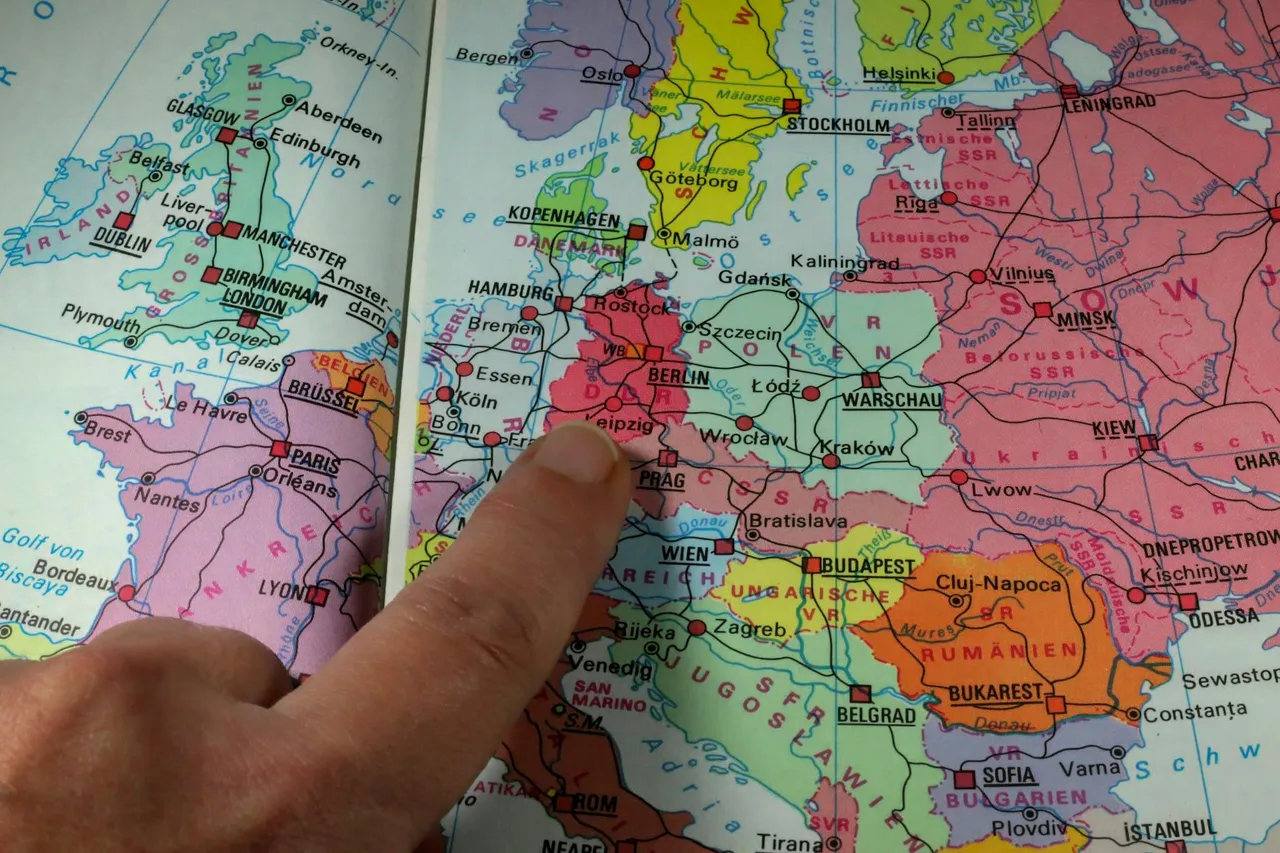
The most significant practical difference is geographic coverage. The original EHIC was valid across all EU and EEA countries, which included Norway, Iceland, Liechtenstein, and Switzerland. When most UK residents were shifted to the GHIC, coverage for those four countries was initially lost[5].
The UK has since negotiated new bilateral agreements. Switzerland was added in 2022, and Norway, Iceland, and Liechtenstein followed in January 2024 under a social security coordination agreement. These countries now accept the GHIC as evidence of entitlement under their respective bilateral schemes[8]. Australia has also accepted the GHIC since 2022 as proof of eligibility to enrol in Medicare[5].
The second difference is eligibility. Most UK residents will now receive a GHIC and cannot apply for a new EHIC. However, specific groups may still be entitled to a UK EHIC under the Brexit Withdrawal Agreement. These include EU, Swiss, Norwegian, Icelandic, or Liechtenstein citizens who lived in the UK before 1 January 2021; UK state pension recipients living in the EU registered on form S1; and students who were undertaking study or a work placement abroad before that date[6].
Finally, EU nationals who are legally resident in the UK may also still be eligible for an EHIC. If you fall into any of these categories, the NHS website will determine which card you're entitled to during your application[4].
What if I still have a valid EHIC?
You don't need to do anything right now. A valid EHIC remains usable until its printed expiry date. Once it expires, you apply for a GHIC as the replacement. There is no benefit to switching early unless your card is lost or stolen.
However, if you still have a valid EHIC there is one thing to be aware of: even a valid UK-issued EHIC no longer provides cover in Norway, Iceland, Liechtenstein, or Switzerland unless you were already on a visit to one of those countries before 1 January 2021. For travel to those destinations, you now rely on the newer bilateral agreements, which are evidenced by the GHIC.
Either card is not a substitute for travel insurance
Both the NHS and the UK government are explicit on this point. A GHIC or EHIC does not replace travel insurance. The two are designed to work alongside each other.
The GHIC handles state-provided medical treatment. Travel insurance handles the gaps: repatriation, private hospital costs, cancellations, and baggage. In remote or mountain areas of Europe, public facilities may not be the closest option. If you're taken to a private hospital because no public facility is accessible, the GHIC will not apply and you will face the full bill.
In fact, some travel insurers require you to hold a valid GHIC as a condition of your policy, so double check your policy documents before you travel. The NHS advises having both a GHIC (or valid EHIC) and private travel and medical insurance for the full duration of any trip[1].
If you lose your card while abroad
You can apply for a Provisional Replacement Certificate (PRC) if you need treatment but don't have your card. A PRC provides the same level of cover as a GHIC or EHIC, but it cannot be issued in advance. You apply at the point you need treatment. The NHS Overseas Healthcare Services line is reachable from abroad on +44 (0)191 218 1999, Monday to Friday, 8 am to 5 pm.
Can I use the GHIC outside the EU?
Despite being called the Global Health Insurance Card, the GHIC is currently effective primarily in Europe. Its name reflects its intention rather than current scope. The UK government has indicated it intends to expand the card to cover reciprocal healthcare agreements with further countries as new treaties are signed. The expansion to Switzerland and then the Nordic EEA countries between 2022 and 2024 illustrates that this is an active, ongoing process[5].

For travellers, the practical implication is to check the current list of accepted countries before each trip rather than relying on memory from a previous application. The NHS Business Services Authority publishes an updated list at nhsbsa.nhs.uk[2].
Carrying your medical records alongside your card
While your GHIC proves entitlement to state-funded treatment, it doesn't tell a clinician in Paris, Barcelona, or Warsaw anything about your medical history, current medications, or allergies. That is where your International Patient Summary (IPS) fills the gap.
An IPS is a structured, internationally standardised summary of your health data: conditions, medications, allergies, vaccinations, and more. Built on the FHIR standard, it's designed to be readable by any compatible healthcare system worldwide. Nomedic lets you create and carry your IPS on your phone so that, if you need treatment under your GHIC at a state hospital abroad, the treating team has the context they need from the moment you arrive.
A GHIC gets you through the door. Your IPS helps the doctor treat you correctly once you're inside.
Quick comparison: EHIC vs GHIC
| Feature | EHIC | GHIC |
|---|---|---|
| Issued by | EU/EEA member states | NHS Business Services Authority (UK) |
| Who can apply | EU/EEA residents (and specific UK groups with Withdrawal Agreement rights) | Anyone ordinarily and legally resident in the UK whose healthcare is not covered by another EEA country |
| Geographic coverage | All EU member states plus EEA countries (Norway, Iceland, Liechtenstein) and Switzerland | All EU member states plus Switzerland, Norway, Iceland, Liechtenstein (from 2024), Montenegro, Guernsey, and some British Overseas Territories |
| Cost | Free | Free |
| Validity | Five years | Five years |
| Private healthcare | Not covered | Not covered |
| Repatriation | Not covered | Not covered |
Frequently asked questions
Is my EHIC still valid, or do I need to get a GHIC?
Your EHIC remains valid until its printed expiry date. You do not need to replace it early. Once it expires, you apply for a GHIC, which is also free and valid for five years. If you apply for a new card through the NHS website, you will now automatically receive a GHIC unless you qualify for an EHIC under the Brexit Withdrawal Agreement.
Does the GHIC cover Norway, Iceland, Switzerland and Liechtenstein?
Yes, but only from specific dates. Switzerland was added to GHIC coverage in 2022. Norway, Iceland, and Liechtenstein were added in January 2024 following a social security coordination agreement. These countries now accept the GHIC under their respective bilateral healthcare schemes. Always check the NHS Business Services Authority website for the current list before travelling.
Can I use my GHIC for private hospital treatment abroad?
No. Both the GHIC and the EHIC apply only to state-run healthcare facilities. If you're treated at a private hospital, you're responsible for the full cost. In some areas, particularly remote or mountain regions, the nearest facility may be private. This is one of the main reasons the NHS advises carrying comprehensive travel insurance alongside your health card.
Who is still eligible for a UK EHIC rather than a GHIC?
A small number of people can still apply for a UK EHIC under the Brexit Withdrawal Agreement. These include EU, Swiss, Norwegian, Icelandic, or Liechtenstein citizens who were living in the UK before 1 January 2021; UK state pension recipients living in the EU registered on form S1; certain frontier workers; and students who began placements abroad before that date. The NHS website will confirm which card you are entitled to when you apply.
What happens if I lose my GHIC or EHIC while abroad?
You can apply for a Provisional Replacement Certificate (PRC), which provides the same level of cover as your card. A PRC cannot be issued in advance; you apply when you need treatment. Contact NHS Overseas Healthcare Services from abroad on +44 (0)191 218 1999, Monday to Friday, 8 am to 5 pm.
Does the GHIC replace travel insurance?
No. The GHIC covers medically necessary state-provided healthcare in eligible countries. It does not cover medical repatriation, private hospital costs, trip cancellation, lost baggage, or personal liability. The NHS explicitly advises carrying both a GHIC and a separate travel insurance policy for every trip.
Sources
- [1] NHS – Applying for healthcare cover abroad (GHIC and EHIC)
- [2] NHS Business Services Authority – Where you can use your card
- [3] UK Government – EU-UK Trade and Cooperation Agreement
- [4] NHS Business Services Authority – GHIC application and eligibility
- [5] Wikipedia – UK Global Health Insurance Card (for bilateral agreement timeline)
- [6] NHS Business Services Authority – GHIC FAQ: eligibility for residents
- [7] European Commission — European Health Insurance Card (official)
- [8] NHS inform Scotland — Healthcare for UK passport holders abroad
Topics
Related articles
- ArticleAntivirals at the Border: What Customs Officers Don't Tell You About Valaciclovir, Acyclovir, and Oseltamivir
- ArticleBlood Pressure Medication Abroad: Brand Swaps, Refill Rules, and Heat
- ArticleBiologics Don't Forgive a Broken Cold Chain: What Travellers on Adalimumab and Infliximab Must Know
- ArticleHepatitis B and C Antivirals Abroad: Where Your Prescription Survives the Border
- ArticleWhat Happens If You Have a Medical Emergency Abroad
- ArticleAntipsychotic Travel: Clozapine Monitoring, Depot Scheduling and Availability by Country